
How Much Protein Per Day to Build Muscle
How much protein per day do you need to build muscle? Get the exact grams by bodyweight and goal, the per-meal absorption myth, and the cheapest sources.
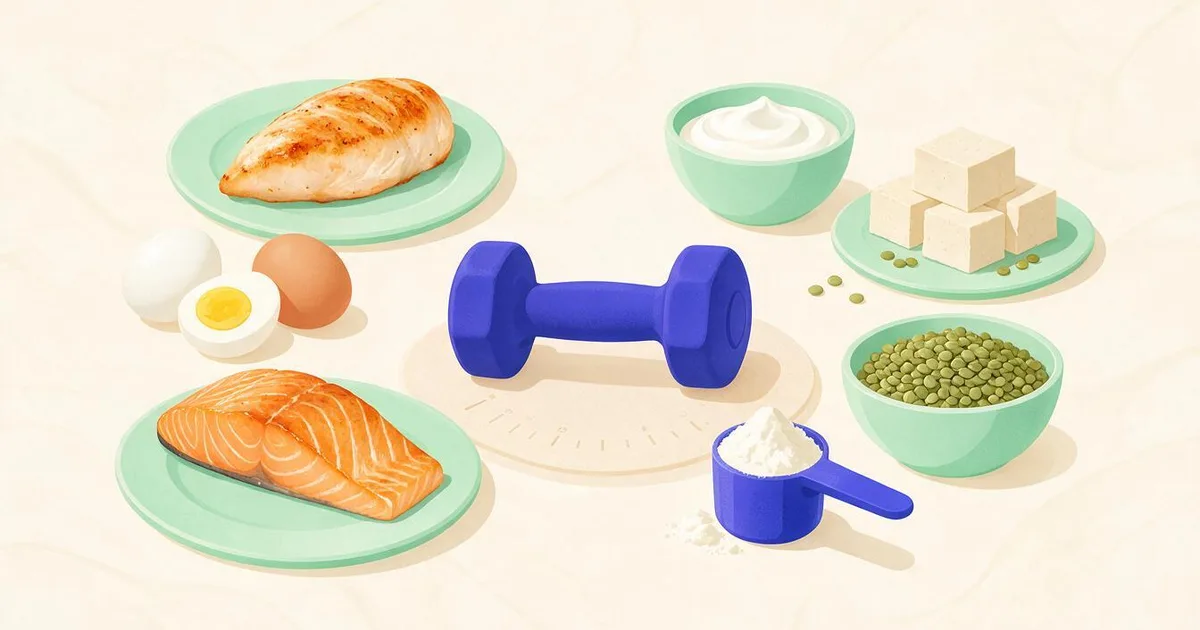
Short answer: how much protein per day depends on your bodyweight and your goal. If you’re training to build muscle, aim for 0.7 to 1 gram per pound of bodyweight, so a 170-pound lifter targets roughly 120 to 170 grams a day. Sedentary adults need far less, closer to 0.36 grams per pound, but that floor only prevents deficiency, it doesn’t build anything. This guide gives you the exact grams for your size, clears up the per-meal absorption myth, and shows which foods hit your target for the least money.
If you’d rather not do the arithmetic, the protein calculator turns your weight, activity, and goal into a daily gram target in a few seconds. Everything below explains where that number comes from and how to actually eat it.
How much protein per day do you really need?
The honest answer is that your protein need is a range, not a single magic number, and where you land in it depends on what you’re asking your body to do. The government’s minimum, the RDA, is set at 0.36 grams per pound (0.8 g/kg). That’s the amount that keeps an average, mostly inactive adult from slowly losing tissue. It was never meant to be a target for someone lifting weights or trying to grow.
Once you train, that floor lifts sharply. Decades of research on lifters and athletes point to a working range of 0.7 to 1 gram per pound of bodyweight for building or keeping muscle. Here’s how the common goals stack up.
| Who you are | Grams per pound | Grams per kg | What it does |
|---|---|---|---|
| Sedentary adult (RDA) | 0.36 | 0.8 | Prevents deficiency, no more |
| Active, general health | 0.5-0.7 | 1.1-1.5 | Supports recovery and daily activity |
| Building muscle | 0.7-1.0 | 1.6-2.2 | Maximizes muscle repair and growth |
| Losing fat, keeping muscle | 0.8-1.1 | 1.8-2.4 | Protects muscle in a calorie deficit |
| Older adult (50+) | 0.6-0.9 | 1.3-2.0 | Fights age-related muscle loss |
Notice the two situations that push protein highest: building muscle and dieting. When you’re eating in a deficit, your body is more likely to burn muscle for fuel, so a higher protein intake is what keeps the loss coming from fat instead. We break the deficit side down in how many calories to lose weight, which pairs neatly with a high-protein plan.
How much protein do you need to build muscle?
For muscle specifically, the sweet spot most studies converge on is around 0.8 gram per pound of bodyweight, with 1 gram as a comfortable ceiling. That number does two jobs at once. It supplies the raw amino acids your body assembles into new muscle, and it keeps muscle protein synthesis, the actual building signal, switched on often enough to matter.
You’ll hear the old bodybuilding rule of “a gram per pound,” and it isn’t wrong, it’s just usually more than you strictly need. The research shows gains flatten out well before that, which we’ll get to. If you eat somewhere between 0.7 and 1 gram per pound and train hard, you’ve covered the protein side of muscle growth. What you do in the gym and how much you sleep matter just as much from there.
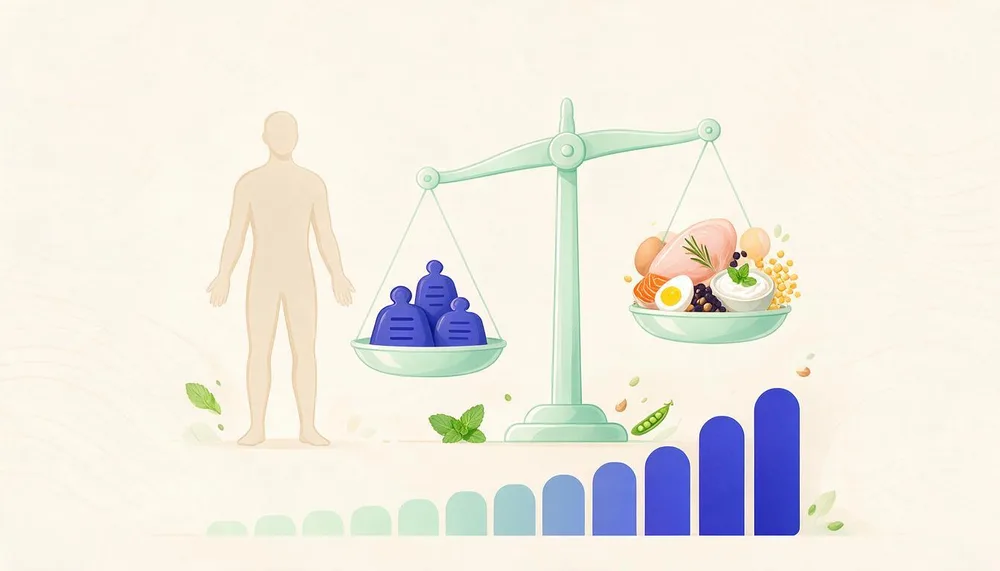
What are your protein grams by bodyweight and goal?
Percentages and grams-per-kilo are fine for a formula, but nobody eats in kilograms. Here’s the part most guides skip: your actual daily gram target, mapped to your bodyweight and your goal, so you can read your number straight off the table.
| Bodyweight | Maintain muscle (0.6 g/lb) | Build muscle (0.8 g/lb) | Cutting, protect muscle (1.0 g/lb) |
|---|---|---|---|
| 120 lb | 72 g | 96 g | 120 g |
| 140 lb | 84 g | 112 g | 140 g |
| 160 lb | 96 g | 128 g | 160 g |
| 180 lb | 108 g | 144 g | 180 g |
| 200 lb | 120 g | 160 g | 200 g |
| 220 lb | 132 g | 176 g | 220 g |
If you’re carrying a lot of extra fat, base the number on your goal weight or lean mass rather than your current scale weight, otherwise the target comes out higher than you need. A 250-pound person aiming for 190 would set protein off 190, not 250. To dial this in with your own stats and activity level, run the protein calculator, and if you want your carbs and fat set alongside it, our guide on how to count macros walks through the full split.
Does eating more protein build more muscle?
Up to a point, and then it stops helping. This is the single most misunderstood part of protein, and it saves a lot of money and force-fed chicken to get it right. A large review pooling dozens of studies found that muscle and strength gains kept improving as protein rose, but the benefit flattened at roughly 1.6 grams per kilogram, which is about 0.73 grams per pound. Past that, extra protein mostly just gets burned for energy or stored.
| Daily protein (160 lb person) | Grams per pound | Effect on muscle gain |
|---|---|---|
| 80 g | 0.5 | Below optimal, growth limited |
| 115 g | 0.72 | Near the point of maximum return |
| 160 g | 1.0 | A safe buffer, no real downside |
| 240 g | 1.5 | No extra muscle, wasted protein and money |
The takeaway isn’t to eat the bare minimum, it’s that there’s a plateau. Aiming a bit above the plateau, around 0.8 to 1 gram per pound, gives you a safety margin for days you fall short without wasting food on 1.5 grams per pound. Muscle is built by training plus enough protein, not by protein alone, so once you’ve cleared the threshold, your energy is better spent on progressive overload and rest.
Can your body only absorb 30 grams of protein per meal?
This is the myth that won’t die, and it’s worth killing properly. Your body absorbs nearly all the protein you eat, no matter the portion. A 12-ounce steak isn’t wasted. What actually has a limit is muscle protein synthesis, the building response to a meal, which tends to max out somewhere around 25 to 40 grams of quality protein per sitting for most people. Beyond that, the extra protein still gets digested and used, it just gets used for other jobs instead of driving more muscle growth in that moment.
The practical upshot is about spreading, not capping. If your target is 140 grams, you’ll trigger more building peaks by splitting it into four meals of 35 than by eating 100 at dinner. Here’s what that looks like across a day.
| Approach | How it’s split (140 g target) | Muscle-building peaks |
|---|---|---|
| One big meal | 40 g + 20 g + 80 g | About two useful peaks |
| Two solid meals | 70 g + 70 g | Two strong peaks |
| Even spread (best) | 35 g x 4 meals | Four peaks across the day |
You don’t need to obsess over this. Three meals with protein, plus a protein-rich snack, handles it without a spreadsheet. But if you’re eating most of your protein at one meal, nudging some to breakfast is an easy win that costs nothing.
Which protein sources give you the most per dollar?
Here’s an angle almost no protein guide covers honestly: cost. When you’re eating 120 to 180 grams a day, the price per gram adds up fast, and knowing the cheap winners keeps a high-protein diet affordable. These figures are rough US averages and will shift with sales and region, but the ranking holds up well.
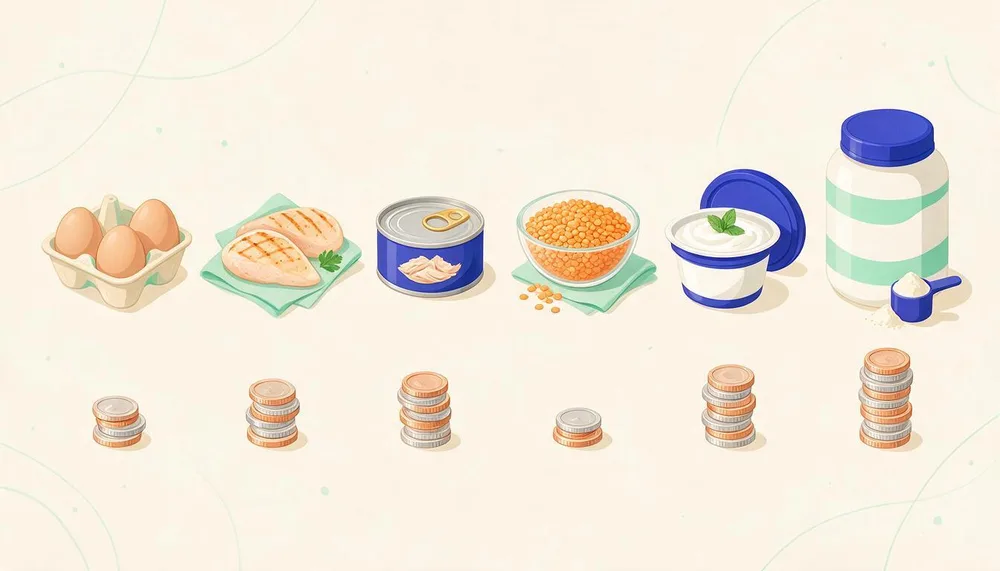
| Food | Protein per serving | Rough cost per 30 g protein | Value |
|---|---|---|---|
| Eggs | 6 g each | $0.40-0.60 | Excellent |
| Milk (2%) | 8 g per cup | $0.35-0.55 | Excellent |
| Dried lentils | 18 g per cooked cup | $0.20-0.40 | Best value |
| Canned tuna | 20 g per can | $0.60-0.90 | Very good |
| Whey protein powder | 24 g per scoop | $0.50-0.80 | Very good |
| Chicken breast | 26 g per 4 oz | $0.70-1.20 | Good |
| Greek yogurt | 17 g per cup | $0.80-1.20 | Good |
| Deli meat / jerky | varies | $1.50-3.00 | Expensive |
Dried lentils, eggs, milk, and canned tuna are the quiet champions. Whey powder surprises people once they price it per gram, since a big tub works out cheaper than most fresh meat. If money is tight, build your base around those and treat pricier cuts and ready-made shakes as occasional extras rather than staples. A high-protein diet doesn’t have to be a high-cost one.
Do you need more protein from plants than from meat?
If you eat mostly plants, the answer is a modest yes, and it’s worth understanding why rather than just eating more blindly. Protein quality rests on two things: whether a food has all nine essential amino acids, and how much leucine it carries, since leucine is the amino acid that flips the muscle-building switch. Animal foods score high on both. Many single plant foods run a little short on one amino acid, so gram for gram they drive slightly less muscle growth.
| Source type | Protein quality | Practical adjustment |
|---|---|---|
| Eggs, whey, meat, fish | Complete, high leucine | Use your standard target |
| Dairy, soy | Complete, good leucine | Standard target, no change |
| Lentils, beans, grains | Often lower in one amino acid | Eat 10-20% more, vary sources |
| Vegan blend powder (pea + rice) | Complete when blended | Standard target |
The fix costs you almost nothing. Aim for maybe 10 to 20 percent more total protein if your diet is heavily plant-based, mix your sources through the day so beans, grains, soy, and seeds cover each other’s gaps, and lean on soy and blended powders when you want a complete hit in one go. Done this way, a plant-based eater builds muscle just fine.
When should you eat protein to build muscle?
Timing is real, but it’s the last 5 percent, not the foundation. The single most important thing is hitting your daily total. Once that’s handled, spreading protein into three or four meals of roughly 25 to 45 grams, a few hours apart, gives you more of those building peaks than one or two giant servings. That’s the version of timing that actually moves the needle.
The famous “anabolic window,” the idea that you must slam protein within 30 minutes of a workout or lose your gains, has been walked back hard by the research. As long as you’ve eaten protein within a few hours either side of training, you’re covered. One habit that does seem to help a little is a protein-rich meal or casein-heavy snack before bed, which trickles amino acids in overnight while you recover. None of this outranks the daily total though, so nail that first.
How do you actually hit your protein target every day?
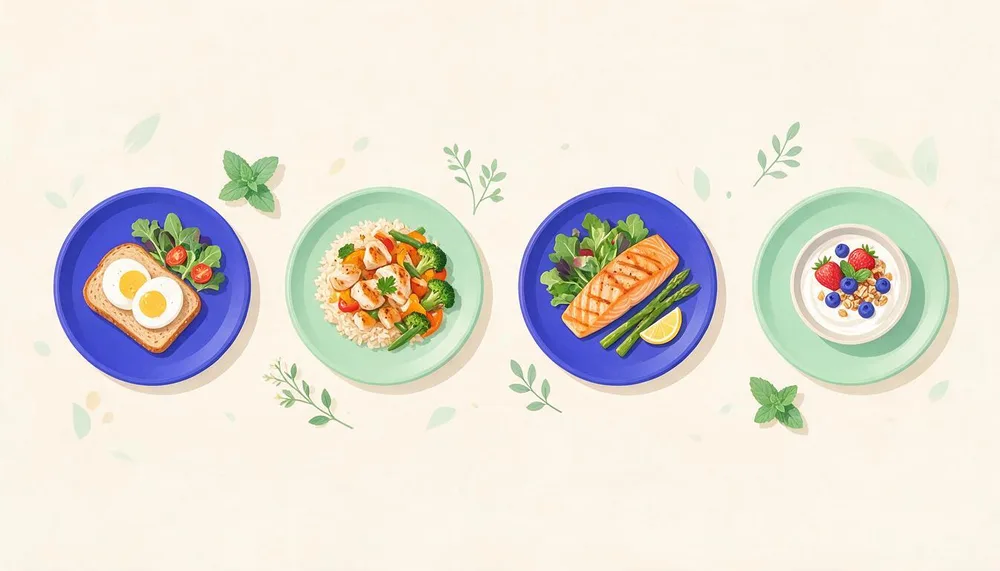
Knowing your number is easy, eating it consistently is where people slip. The trick is anchoring each meal around a protein source instead of adding protein as an afterthought. Build the plate protein-first, then fill in carbs and vegetables. Here’s what common foods contribute so you can assemble a day without weighing everything.
| Food | Typical serving | Protein |
|---|---|---|
| Chicken breast | 4 oz cooked | 26 g |
| Salmon | 4 oz cooked | 25 g |
| Ground beef (90%) | 4 oz cooked | 23 g |
| Greek yogurt | 1 cup | 17 g |
| Cottage cheese | 1 cup | 24 g |
| Eggs | 2 large | 12 g |
| Whey shake | 1 scoop | 24 g |
| Lentils | 1 cooked cup | 18 g |
| Tofu (firm) | 1/2 block | 20 g |
A simple day for a 160-pound lifter aiming at 130 grams might be two eggs and yogurt at breakfast (29 g), a chicken and rice bowl at lunch (30 g), a whey shake as a snack (24 g), and salmon with lentils at dinner (43 g). That’s 126 grams without much effort, and it lands close enough to the target. If you’d rather see your protein sit inside your full calorie and macro plan, our guide on how to lose weight the healthy way shows how the pieces fit, and the protein calculator sets the exact gram goal this whole plan hangs on. Get the daily number right, spread it across your meals, and let your training do the rest.
Frequently asked questions
For building muscle, aim for about 0.7 to 1 gram of protein per pound of bodyweight each day, which is roughly 1.6 to 2.2 grams per kilogram. A 170-pound lifter lands near 120 to 170 grams a day. The lower end of that range works well if you're eating enough total calories, while the higher end helps most when you're in a calorie deficit and trying to hold muscle while losing fat. Going much above 1 gram per pound rarely adds more muscle, so there's little reason to force down extra.
It depends on your size. For someone around 130 to 145 pounds, 100 grams lands near the muscle-building range and is plenty. For a 180 or 200-pound person, 100 grams is on the low side and probably limits your results, since that works out to roughly half a gram per pound. Rather than chase a round number, tie your target to your bodyweight. Set it near 0.7 to 1 gram per pound, then check whether 100 grams actually hits that for your frame.
No, that's a myth. Your gut absorbs nearly all the protein you eat, whatever the portion size, it just takes longer with a bigger meal. What the research really shows is that muscle protein synthesis, the building signal, tends to max out around 25 to 40 grams of high-quality protein in one sitting. So a 60-gram steak still feeds you, but spreading protein across three or four meals gives you more of those building peaks in a day than loading it all at dinner.
For healthy adults, protein intakes up to about 1 gram per pound of bodyweight are well studied and safe, and even higher amounts haven't been shown to harm the kidneys in people with normal kidney function. The real downside of very high protein is practical, not medical. It crowds out carbs and fat you might want for energy and hormones, it gets expensive, and it's hard to keep eating. If you already have kidney disease, talk to your doctor before pushing protein high.
Eggs, canned tuna, dried lentils, and milk usually deliver the most protein per dollar, often under 50 cents for 30 grams. Whole chicken and pork shoulder are close behind when bought on sale. Whey protein powder is cheaper than most people expect once you price it per gram, and it beats nearly every fresh meat. The pricey options tend to be pre-cooked meats, jerky, and ready-to-drink shakes. If budget is your limit, a base of eggs, milk, lentils, and whey covers most of your daily target cheaply.
A little more, yes. Animal proteins like eggs, whey, and meat contain all the essential amino acids in ideal amounts, so your body uses them efficiently. Many single plant foods are lower in one amino acid, usually leucine or lysine, which slightly lowers how much muscle-building each gram drives. The fix is simple. Eat a bit more total plant protein, around 10 to 20 percent above your usual target, and mix your sources across the day so the amino acids fill each other's gaps. Soy, lentils, and a good vegan blend powder make this easy.
Spacing matters more than exact timing. Splitting your protein into three or four meals of roughly 25 to 45 grams, spaced a few hours apart, drives more muscle-building peaks than one or two huge servings. The old idea of a narrow 30-minute window after training is mostly overblown, though eating some protein within a couple of hours of a workout is a sensible habit. A protein-rich meal before bed can also help overnight recovery. Hit your daily total first, then worry about spreading it out.
Calcowa's editorial team builds and checks every calculator against published formulas, then writes these guides so the numbers make sense. Each tool shows its formula and a worked example. See our methodology.
Related guides
Target Heart Rate Zones for Fat Loss
Target heart rate zone for fat loss runs about 60 to 70 percent of your max heart rate, but higher zones burn more total fat. Get the full chart and math.
Health & FitnessCalories Burned Walking: A Complete Guide
Calories burned walking depends on your weight, pace, and incline. A 155-pound person burns about 86 calories per mile at a moderate pace. See the charts.
Health & FitnessWhat Is a Healthy Body Fat Percentage?
A healthy body fat percentage depends on your sex and age. See the full range charts, how to measure yours accurately, and why it beats BMI as a marker.