
How to Count Macros: Protein, Carbs, and Fat
How to count macros without the confusion: the exact protein, carb, and fat grams to eat for your goal, how to read a food label, and a no-app hand method.
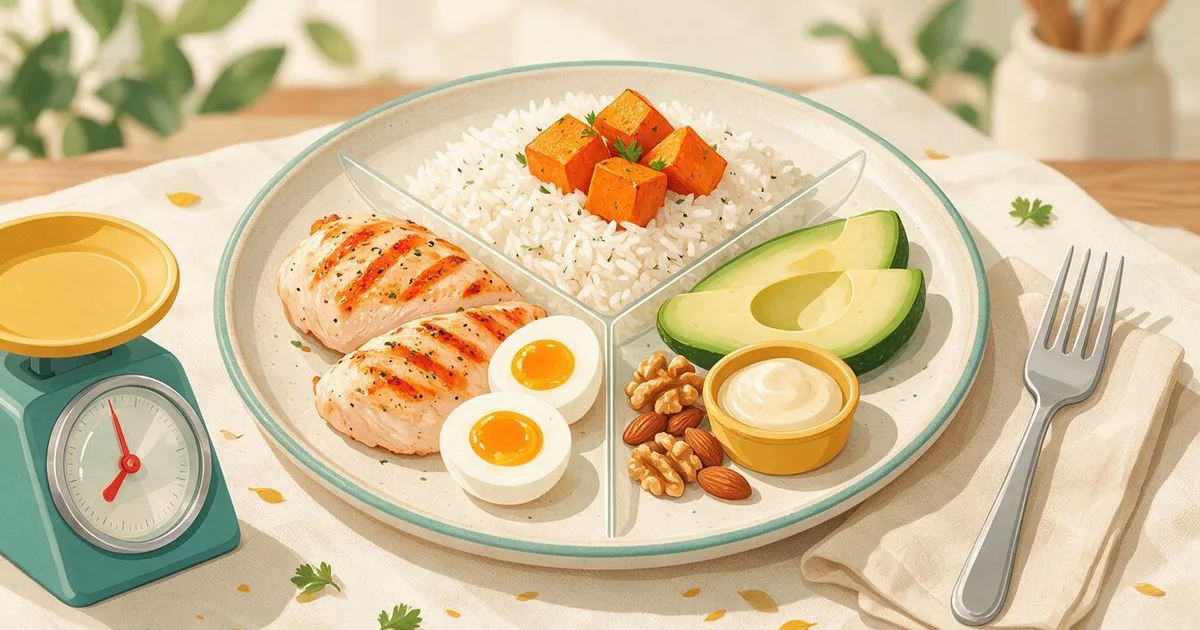
Short answer: how to count macros comes down to four moves. Find your daily calories, set protein by your bodyweight, set fat at 20 to 30 percent, and fill the rest with carbs, then track what you eat until the grams add up. Macros, short for macronutrients, are just protein, carbohydrate, and fat, and counting them is calorie tracking with a smarter target. This guide walks through what each macro does, the exact grams to aim for, why the popular percentage method quietly fails, and how to log your food with or without an app.
If you’d rather skip the arithmetic, the macro calculator turns your height, weight, age, activity, and goal into daily protein, carb, and fat targets in a few seconds.
What are macros, exactly?
Macros are the three nutrients your body needs in large amounts, and they carry every calorie you eat. Protein and carbohydrate each hold 4 calories per gram, while fat packs 9, which is why a spoon of oil costs more than it looks. There’s a quiet fourth source too, alcohol at 7 calories a gram, and forgetting it is why a “clean” day still stalls the scale.
| Macro | Calories per gram | Main job | Where you get it |
|---|---|---|---|
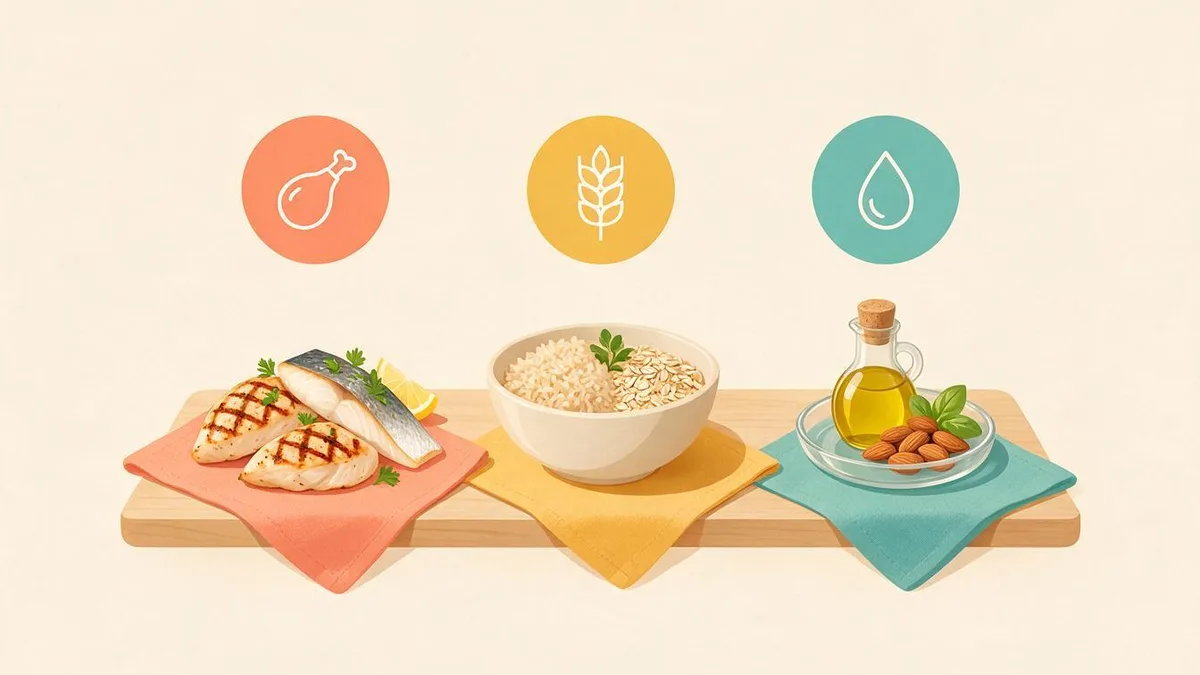
| Protein | 4 | Builds and repairs muscle, keeps you full | Chicken, fish, eggs, Greek yogurt, tofu, beans |
| Carbohydrate | 4 | Main fuel for muscles and brain | Rice, oats, potatoes, fruit, bread, pasta |
| Fat | 9 | Runs hormones, absorbs vitamins | Oils, nuts, avocado, cheese, fatty fish |
| Alcohol | 7 | None essential, pure energy | Beer, wine, spirits |
Because these are the only things carrying calories, hitting your macro grams lands you near a calorie total automatically. That’s the whole appeal. You aren’t picking between counting macros and counting calories, you’re doing both at once, with the added benefit that macros tell you what kind of calories you ate. If you want the mechanism behind why the calorie side matters, we’ve broken down what a calorie deficit is on its own page.
How to count macros in five steps
The process looks technical the first time and takes about ten minutes to learn. Every method online, whether it calls itself IIFYM or flexible dieting, is this same sequence with different wording.
| Step | What you do | The tool or number |
|---|---|---|
| 1. Find your calories | Estimate what you burn in a day (your TDEE) | Mifflin-St Jeor plus activity level |
| 2. Set your goal | Subtract for fat loss, hold for maintenance, add to gain | 300-500 calorie deficit is a good default |
| 3. Set protein | Anchor it to your bodyweight, not a percentage | 0.7-1 g per lb of goal weight |
| 4. Set fat, then carbs | Fat at 20-30% of calories, carbs get the rest | Fat grams = calories x 0.25 / 9 |
| 5. Track daily | Log food and check the running total | An app or a food scale |
Here’s a worked example so the math stops feeling abstract. Say you’re 160 pounds, moderately active, and eating 1,800 calories to lose fat. Protein comes first: 160 times 0.8 gives 128 grams, which is 512 calories. Fat at 25 percent of 1,800 is 450 calories, or 50 grams. That leaves 838 calories for carbs, which at 4 per gram is about 210 grams. So your day is 128 grams protein, 50 grams fat, 210 grams carbs. Notice you didn’t start with a percentage, you started with your body. To pin down step one for your own stats, the TDEE calculator gives you the burn number this whole plan hangs on.
How many grams of each macro should you eat?
This is the part most guides skip. They hand you percentages and leave you to do the conversion, but grams are what you actually eat. Protein is the macro to set by bodyweight, because your muscle needs a roughly fixed amount whether you’re cutting or bulking. Here’s the protein target across common goal weights, with the carb and fat ranges that usually pair with it on a fat-loss day.
| Goal bodyweight | Protein (0.8 g/lb) | Fat (25% of cals) | Carbs (fill the rest) |
|---|---|---|---|
| 130 lb | 105 g | 40-45 g | 130-160 g |
| 150 lb | 120 g | 45-50 g | 150-190 g |
| 180 lb | 145 g | 55-60 g | 190-230 g |
| 200 lb | 160 g | 60-65 g | 210-260 g |
Don’t treat these as sacred. If you’re very active you’ll push carbs higher; if you feel steadier on fewer carbs you’ll trade some for fat. What shouldn’t drop is protein, because that’s the number protecting your muscle while the fat comes off. If you want to dial in that one macro on its own, the protein calculator sets a daily gram target from your weight and training, and the macro calculator will set all three at once for your exact stats.
Why does the percentage method break down?
Almost every beginner guide tells you to pick a split like 40/30/30 and multiply it by your calories. It sounds tidy, and it’s how the big sites teach it, but it has a real flaw nobody mentions: a percentage makes your protein float up and down with your total calories, when your protein need is fixed by your bodyweight. Watch what happens to a 160-pound person who needs about 128 grams of protein, if they set protein at a flat 30 percent.
| Daily calories | Protein at 30% | Grams | Versus 128 g need |
|---|---|---|---|
| 1,200 | 360 cal | 90 g | Far too low, muscle at risk |
| 1,600 | 480 cal | 120 g | About right |
| 2,000 | 600 cal | 150 g | A bit high, harmless |
| 2,800 | 840 cal | 210 g | Overshoots, crowds out carbs |
At low calories, the exact time you most need protein to hold muscle, the percentage method starves it. At high calories it hands you more protein than you can use and steals from the carbs that fuel your training. That’s why the smarter order is protein first in grams, fat next, carbs last. Set the number that matters by your body, then let the flexible macros absorb the swing. Percentages are fine for a rough sketch, but they’re a bad way to lock in the one macro you can’t afford to get wrong.
What macro split should you use for your goal?
Once protein is anchored, the carb-to-fat balance is mostly preference and activity. Here’s an honest starting point for each goal, written as a split so you can sanity-check your app, with the reason behind each one.
| Goal | Protein | Carbs | Fat | Why it fits |
|---|---|---|---|---|
| Fat loss | 40% | 30% | 30% | High protein guards muscle and hunger in a deficit |
| Maintenance | 30% | 40% | 30% | Balanced and easy to hold long term |
| Muscle gain | 30% | 50% | 20% | Extra carbs fuel training and recovery |
| Low-carb / keto | 25% | 5-10% | 65-70% | Fat replaces carbs as the main fuel |
| Endurance | 25% | 55% | 20% | Long training runs on carbohydrate |
Treat any split as a first draft. Run it for two or three weeks, watch the trend on the scale and in the mirror, and adjust the carbs and fat while you hold protein steady. People chasing fat loss sometimes ask whether counting macros beats just eating less, and the answer is that the deficit still does the work, macros just protect what you keep. If you’re building the deficit side of this, our breakdown of how many calories to lose weight pairs neatly with these splits.
How do you read a food label to log macros?
Logging goes wrong at the label more than anywhere else, because the numbers hide a couple of traps. Master this and your tracking gets honest overnight.
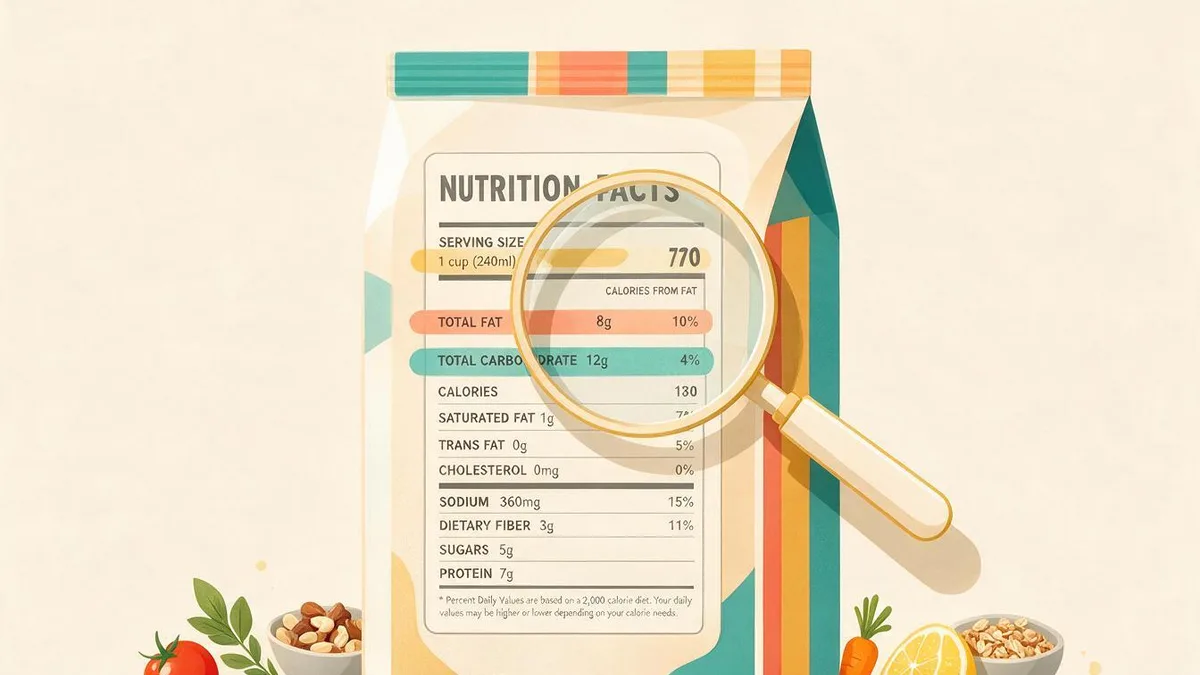
| Label line | What it means for your macros | The trap to avoid |
|---|---|---|
| Serving size | Every number below is per serving, not per package | A “150 calorie” bag is often 2.5 servings |
| Total carbohydrate | Log this whole number in most cases | Don’t forget it already includes sugar and fiber |
| Dietary fiber | Passes through with little usable energy | Subtract only if you’re tracking net carbs |
| Total fat | Counts at 9 calories a gram, so it adds up fast | Oils and dressings hide here in cooked food |
| Protein | Usually the number you want to maximize | Some “high protein” claims are per package, not serving |
The serving-size line is the big one. Packages are sized to look modest, so a jar that seems like a snack is three logged entries. Weigh the food with a scale for anything calorie-dense, especially oils, nut butters, cheese, and grains, because eyeballing those is where a tracked 1,800-calorie day becomes a real 2,300. For anything without a label, like a chicken breast or an apple, your app’s database has an entry, and picking the “raw” or “cooked” version correctly matters more than people think.
Can you count macros without an app?
You can, and plenty of people prefer it. The hand-portion method trades precision for a system you’ll actually keep, using your own hand as a measuring tool that scales with your body size. It’s the fastest way to eat by macros when logging feels like too much.
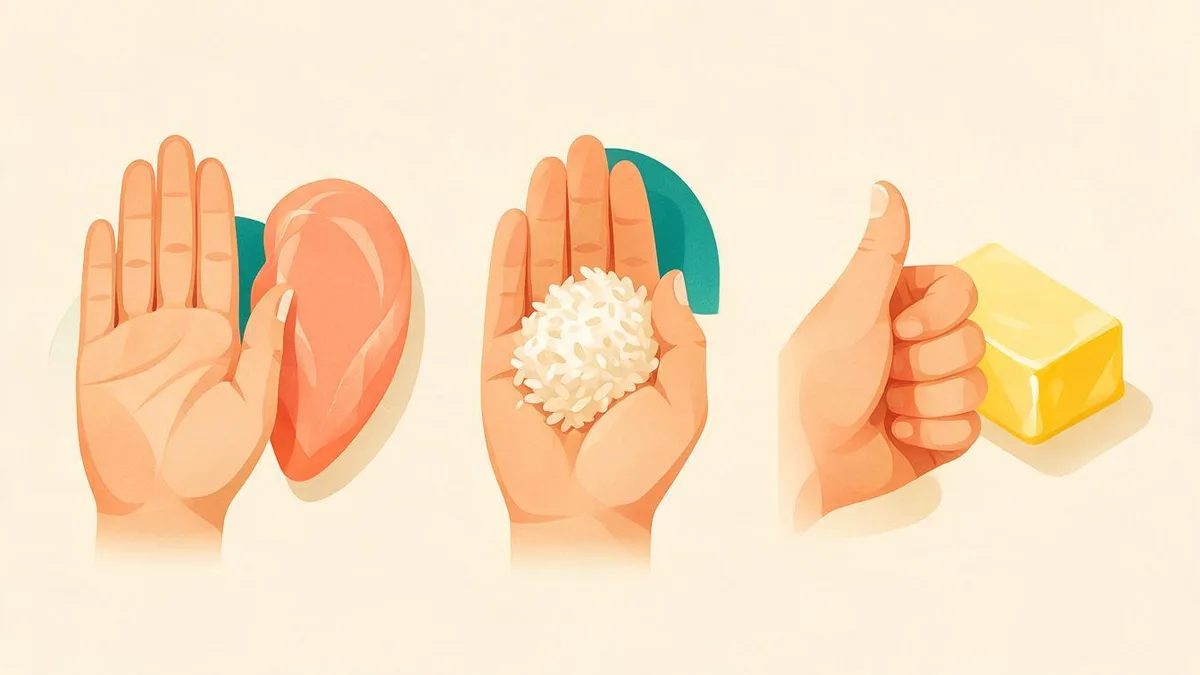
| Your hand | Measures | Rough macros | Use it for |
|---|---|---|---|
| Palm (thickness and size) | One protein serving | ~25-30 g protein | Meat, fish, tofu, eggs |
| Cupped hand | One carb serving | ~20-25 g carbs | Rice, oats, potato, fruit |
| Thumb | One fat serving | ~10-12 g fat | Oils, nut butter, cheese |
| Fist | One veg serving | Low-calorie, mostly free | Any non-starchy vegetable |
A simple day might be a palm of protein, a cupped hand of carbs, a thumb of fat, and a fist of vegetables at each meal, adjusted up or down by your appetite and goal. Men often use two palms of protein per meal, women one, which lands most people near their targets without a single number logged. It won’t match a food scale, but the best tracking method is the one you don’t abandon by Thursday. Many people start here to build an eye for portions, then log with an app for a couple of weeks whenever the scale stalls and they need hard data.
Why aren’t you losing weight if you hit your macros?
Nothing rattles a new tracker like a flat scale despite “perfect” logging. It’s almost never a broken metabolism. It’s usually one of a short list of leaks, and this table is the one to check before you cut your targets lower.
| Likely cause | What’s really happening | The fix |
|---|---|---|
| Serving-size slip | Logging one serving of a multi-serving package | Weigh it and log the true amount |
| Untracked oils | Cooking fat and dressings never make the log | Add a thumb of fat for anything pan-cooked |
| Weekend drift | Weekdays tracked, weekends estimated | Log the whole week or hold weekdays tighter |
| TDEE too high | Your burn estimate is optimistic | Recalculate at your current weight |
| Water and timing | New training or salty meals holding water | Judge the weekly trend, not the daily number |
The most common culprit by far is the first two, because calorie-dense extras slip past the log easily and a few hundred hidden calories erase a whole deficit. Before you drop your carbs into misery, tighten your tracking for two weeks and see if the trend reappears. It usually does. If the honest number really has shifted because you’ve lost weight, that’s expected, and recalculating your maintenance every ten pounds keeps the deficit real, the same discipline we cover in how to lose weight the healthy way.
Which tools make counting macros easier?
You don’t need much, but the right setup removes most of the friction. A food-tracking app with a barcode scanner does the database lookups and the running math, and a cheap kitchen scale turns guesses into grams for the foods that matter.
| Tool | What it does | Worth it for |
|---|---|---|
| Tracking app (MyFitnessPal, Lose It!, My Macros+) | Logs food, sums macros, scans barcodes | Everyone counting daily |
| Digital kitchen scale | Weighs calorie-dense foods accurately | Anyone serious about results |
| A saved target | Your protein, carb, and fat goals in one place | Checking each meal against a plan |
Set your numbers once with the macro calculator, save them in your app of choice, and the daily job shrinks to logging and glancing at the running total. If your goal or weight changes a lot, rerun the numbers, because the plan that fit you thirty pounds ago is a different plan now. Counting macros isn’t a forever chore for most people either. A month or two of honest tracking teaches your eye what a portion looks like, and plenty of people graduate to the hand method once the lesson sticks. The point was never the app, it was learning to feed your goal on purpose.
Frequently asked questions
Counting macros means tracking how many grams of protein, carbohydrate, and fat you eat each day and hitting a target for each one, instead of only watching total calories. Because the three macros carry all your calories (protein and carbs at 4 per gram, fat at 9), hitting your macro targets automatically lands you near a calorie goal too. The difference is that macros also steer the quality of those calories, so you keep enough protein to hold muscle while you lose fat. It's calorie counting with guardrails on where the calories come from.
Macros, short for macronutrients, are the three things in food your body needs in large amounts: protein, carbohydrate, and fat. Protein builds and repairs tissue, carbs are your main fuel, and fat runs your hormones and helps you absorb certain vitamins. Everything you eat is some mix of these three, plus water and tiny amounts of vitamins and minerals called micros. Alcohol is a fourth energy source at 7 calories a gram, though it isn't essential. When people say they're counting macros, they mean these three.
Set protein first at roughly 0.7 to 1 gram per pound of your goal bodyweight, so a 150-pound target lands near 105 to 150 grams. Set fat next at about 20 to 30 percent of your calories, which keeps hormones happy, then fill the rest with carbs. A 160-pound person eating 1,800 calories to lose fat would run about 128 grams protein, 50 grams fat, and 210 grams carbs. Your numbers shift with your weight, activity, and goal, so it's worth running them once rather than copying someone else's plan.
No, and chasing perfection is the fastest way to quit. Landing within about 5 grams of your protein target and 10 grams of carbs and fat is close enough to get the result. Protein is the one worth guarding most tightly, since it protects muscle and keeps you full. Carbs and fat can trade off day to day as long as your calories stay roughly in range. Think of your macros as a budget you aim for, not a test you fail by a gram.
Yes, as long as the macros add up to fewer calories than you burn. Counting macros doesn't melt fat by magic; it works because tracking protein, carbs, and fat forces you to see your real intake and hold a calorie deficit. The bonus over plain calorie counting is that a high protein target keeps more of the loss as fat instead of muscle. If the scale won't move while you hit your macros, your targets are set too high or portions are drifting untracked.
A common starting split for fat loss is 40 percent protein, 30 percent carbs, and 30 percent fat, but a percentage isn't the smartest way to set protein. Anchor protein to your bodyweight first, around 0.8 to 1 gram per pound of goal weight, because your muscle needs a fixed amount that doesn't shrink just because you're eating less. Then split the rest between carbs and fat by preference. Higher carbs suit active people and hard training; higher fat suits those who feel steadier on fewer carbs.
For general fat loss and muscle goals, count total carbs, since that's what most apps and food labels report and it keeps your numbers honest. Net carbs, which subtract fiber and some sugar alcohols, mainly matter on a strict keto diet where you're capping carbs hard. Fiber does pass through with little usable energy, so subtracting it isn't wrong, but for beginners it adds a step that rarely changes the outcome. Pick one method and stay consistent so your data means something.
Calcowa's editorial team builds and checks every calculator against published formulas, then writes these guides so the numbers make sense. Each tool shows its formula and a worked example. See our methodology.
Related guides
Target Heart Rate Zones for Fat Loss
Target heart rate zone for fat loss runs about 60 to 70 percent of your max heart rate, but higher zones burn more total fat. Get the full chart and math.
Health & FitnessCalories Burned Walking: A Complete Guide
Calories burned walking depends on your weight, pace, and incline. A 155-pound person burns about 86 calories per mile at a moderate pace. See the charts.
Health & FitnessWhat Is a Healthy Body Fat Percentage?
A healthy body fat percentage depends on your sex and age. See the full range charts, how to measure yours accurately, and why it beats BMI as a marker.