
Calories Burned Walking: A Complete Guide
Calories burned walking depends on your weight, pace, and incline. A 155-pound person burns about 86 calories per mile at a moderate pace. See the charts.

Short answer: calories burned walking come down mostly to your body weight and the distance you cover, not how fast you go. A 155-pound person burns about 86 calories per mile at a moderate 3 mile-per-hour pace, or roughly 300 to 400 over a typical 30-to-45-minute walk. Here’s the catch that trips up almost everyone, though: those are gross calories, and the number that actually moves the scale is lower. This guide gives you the full charts by weight, pace, incline, and steps, plus the net-versus-gross math that most calculators quietly skip.
If you’d rather just get your number, the calories burned calculator does the arithmetic in seconds once you enter your weight, pace, and time. Everything below explains where those figures come from and how to read them honestly.
How many calories do you burn walking?
A single walk doesn’t have one fixed answer, because two things change it the most: how much you weigh and how far you go. A heavier body spends more energy moving the same distance, so weight scales the number almost directly. Time and distance then set the total. Pace matters far less than people think, which we’ll prove in a minute.
Here’s a per-mile chart at a moderate 3 mile-per-hour walk. The gross column counts every calorie your body used. The net column subtracts the resting calories you’d have burned anyway, which is the figure that matters for weight loss.
| Body weight | Gross cal/mile | Net cal/mile |
|---|---|---|
| 120 lb | 67 | 48 |
| 140 lb | 78 | 56 |
| 155 lb | 86 | 62 |
| 180 lb | 100 | 71 |
| 200 lb | 111 | 79 |
| 250 lb | 139 | 99 |
Read down the gross column and you’ll see the near-straight line with weight. A 250-pound walker burns about double what a 120-pound walker does over the same mile. That’s not unfair, it’s just physics: more mass, more work. The gap between the two columns is the part most charts hide, and it’s worth understanding before you build any calorie plan around walking.
What’s the formula for calories burned walking?
The number isn’t a guess. It comes from a metabolic unit called a MET, short for metabolic equivalent, which measures how hard an activity is compared to sitting still. One MET is your resting burn. Moderate walking is about 3.5 METs, so it burns roughly three and a half times your resting rate.
The gross formula is straightforward:
Calories per minute = MET × 3.5 × weight in kg ÷ 200
Say you weigh 155 pounds, which is 70.3 kilograms, and you walk at 3 miles per hour (3.5 METs). That’s 3.5 × 3.5 × 70.3 ÷ 200, or about 4.3 calories a minute. Walk for 20 minutes and you’ve covered a mile and burned roughly 86 calories gross. To get the net number, you swap the MET value for the activity minus one, since one MET is the resting baseline you’d burn regardless. That single tweak is the whole net-versus-gross story, and it’s why the honest figure runs lower.
How does walking speed change calories burned?
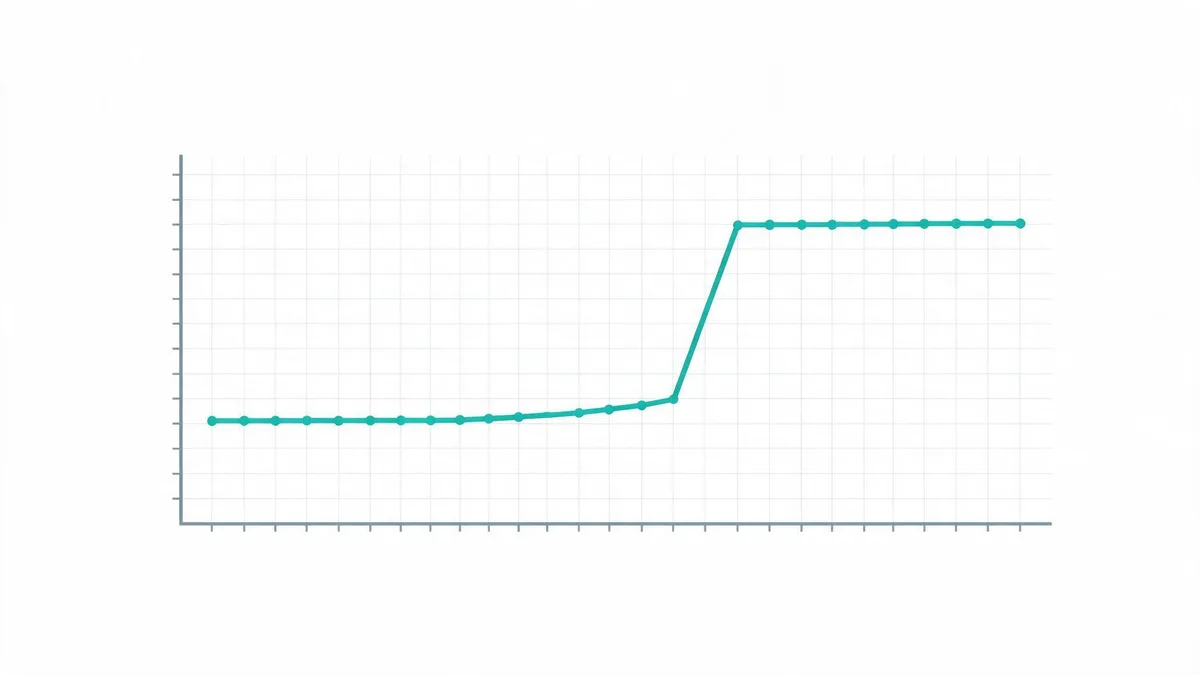
This is where the surprise lives. Walking faster does burn more calories per hour, but barely more per mile. The reason is that a quicker pace raises your MET value, yet it also gets you to the mile marker sooner, so the two effects nearly cancel out over a fixed distance.
Here’s the per-mile burn for a 155-pound walker at different speeds, followed by a jog and a run for contrast.
| Pace | Speed | METs | Gross cal/mile |
|---|---|---|---|
| Slow stroll | 2.5 mph | 3.0 | 89 |
| Moderate | 3.0 mph | 3.5 | 86 |
| Brisk | 3.5 mph | 4.3 | 91 |
| Very brisk | 4.0 mph | 5.0 | 92 |
| Jog | 5.0 mph | 8.0 | 118 |
| Run | 6.0 mph | 9.8 | 121 |
Look at the walking rows: they hover between 86 and 92 calories per mile no matter the speed. Then jogging jumps the number by a third. So if your goal is calories per mile, pace hardly matters until you break into a run. What speed does change is calories per hour, because a brisk walker simply covers more miles. Walk 4 miles per hour for an hour and you’ll clock about four miles and 368 gross calories, versus roughly 258 at a 3 mile-per-hour amble. The lesson is simple: to burn more, go farther or go uphill, and don’t stress about shaving seconds off your pace.
How many calories does walking burn in 30 minutes or an hour?
Since most people walk by the clock rather than by the mile, here’s the burn by duration for a 155-pound person at three common paces. These are gross calories.
| Pace | 30 minutes | 45 minutes | 60 minutes |
|---|---|---|---|
| 2.5 mph | 111 | 166 | 221 |
| 3.0 mph | 129 | 194 | 259 |
| 3.5 mph | 159 | 238 | 317 |
| 4.0 mph | 184 | 277 | 369 |
A half-hour brisk walk lands around 159 calories for this walker, and an hour at a good clip clears 300. Scale these up or down with your weight using the ratio from the per-mile chart: if you weigh 200 pounds, multiply by about 1.3, and if you weigh 120, multiply by roughly 0.78. To fold these numbers into a full daily plan, pair them with your maintenance burn from the TDEE calculator, which tells you how many calories you use in a day before any exercise.
Net vs gross calories: which number is real?
Here’s the distinction that changes everything, and almost no walking chart spells it out. Gross calories are the total your body burned during the walk. Net calories are the extra you burned on top of what you’d have used just sitting on the couch. Since your body is always burning some baseline energy, part of any walk’s total would’ve happened anyway.
| The same 3 mph mile (155 lb) | Calories |
|---|---|
| Gross burn (what most charts show) | 86 |
| Resting burn over those 20 minutes | 24 |
| Net burn (the extra from walking) | 62 |
| Typical fitness-tracker estimate | 90 to 105 |
That 24-calorie baseline is roughly 28 percent of the gross total, and it’s the reason walking can look more powerful than it is. For weight loss, the net figure is the honest one, because you’d have burned those resting calories doing nothing. If you plan a deficit around gross numbers, you’ll quietly overcount your burn and wonder why the scale won’t budge. Our guide on how many calories to lose weight walks through building a deficit that accounts for exactly this. When you use the calories burned calculator, remember that it, like most tools, reports gross, so shave off a quarter or so for your true extra burn.
Does walking uphill or on an incline burn more?
Incline is the single most effective way to boost a walk’s burn, and the effect is bigger than most people guess. Going up a grade forces your muscles to lift your body weight against gravity, which stacks on top of the energy of moving forward. Exercise physiologists use a well-established walking equation to quantify it, and the results are dramatic.
Here’s what a 30-minute walk at 3 miles per hour burns for a 155-pound person as the grade climbs.
| Grade | Approx METs | Gross cal / 30 min |
|---|---|---|
| 0% (flat) | 3.3 | 122 |
| 5% | 5.4 | 199 |
| 10% | 7.4 | 273 |
| 15% | 9.5 | 351 |
At a 10 percent grade you’re burning more than double the flat-ground number, all without walking any faster. That’s why a treadmill incline or a hilly route is such a good deal: you get a running-level calorie burn at a walking-level impact on your joints. If hills aren’t handy, even a modest 3 to 5 percent treadmill grade meaningfully bumps your session. Incline also recruits your glutes and calves harder, so you’re building a bit more than just cardio.

How many calories is 10,000 steps?
The famous 10,000-step target is really a distance in disguise. At an average stride of about 2.5 feet, 10,000 steps covers roughly 4.7 miles, so the calorie burn is just your per-mile number multiplied out. Here’s the range by weight, in both gross and net terms.
| Body weight | Gross (10k steps) | Net (10k steps) |
|---|---|---|
| 120 lb | 315 | 225 |
| 140 lb | 366 | 262 |
| 155 lb | 404 | 291 |
| 180 lb | 470 | 334 |
| 200 lb | 522 | 371 |
| 250 lb | 653 | 466 |
Your own figure depends on your stride, which is tied to your height. A taller person covers a mile in fewer steps, so their 10,000 steps stretch farther and burn more. There’s nothing sacred about the round number itself, by the way. It started as a 1960s Japanese marketing slogan, not a research finding. What matters is the distance and the daily consistency. If 7,000 steps is what you can hold every day, that beats hitting 10,000 twice a week and stalling.
Do fitness trackers overestimate walking calories?
If your watch shows a bigger burn than the charts above, you’re not imagining it. Consumer trackers tend to run high on walking for a few reasons. They almost always report gross rather than net calories. They estimate your pace and stride, which can drift from reality. And they infer steps from wrist motion, so arm swinging, pushing a cart, or a bumpy car ride can all pad the count.
| Tracker quirk | Effect on your number |
|---|---|
| Reports gross, not net | Inflates the useful figure by ~25 to 30% |
| No resting-rate subtraction | Counts calories you’d burn anyway |
| Estimated stride and pace | Can be off in either direction |
| Arm-swing and motion false steps | Adds phantom steps and calories |
Research on wrist trackers has found energy-burn errors of 20 to 40 percent, with walking among the harder activities to measure accurately. That doesn’t make them useless. A tracker is great for spotting trends, since a consistently high reading still tells you whether you moved more this week than last. Just don’t treat the calorie total as gospel when you’re doing diet math. For that, lean on the net figures here or work backward from your deficit with the calorie deficit calculator.
Walking vs running: which burns more per mile?
People assume running burns twice what walking does, but the gap per mile is narrower than that. From the speed chart earlier, a brisk walk burns about 91 gross calories per mile for a 155-pound person, while a 6 mile-per-hour run burns around 121. That’s roughly 40 to 50 percent more, not double, because a mile costs similar energy until you’re really moving.
Where running pulls ahead is per hour, since you cover far more ground. Running also keeps burning slightly more afterward through a small afterburn effect. But walking wins on joint impact, sustainability, and how easy it is to fit into a day. It’s also friendlier if you carry more weight or you’re returning from an injury. As for the fat-burning debate, a walk does use a higher share of fat for fuel, though total calories still drive fat loss. We break that down fully in target heart rate zones for fat loss, which settles the fat-burning-zone myth for good.

How can you burn more calories walking?
You don’t have to walk faster to burn more. The biggest levers are distance, incline, and load, and stacking a couple of them turns an ordinary walk into a real workout.
| Tactic | Why it works | Rough added burn |
|---|---|---|
| Add a 5 to 10% incline | Lifts body weight against gravity | +60 to 150% |
| Walk longer, not faster | Distance drives total calories | Directly proportional |
| Carry a weighted pack | Extra load raises the energy cost | +10 to 20% |
| Add short brisk intervals | Bumps average intensity | +5 to 15% |
| Walk on sand or trails | Uneven ground costs more effort | +20 to 50% |
Incline is the standout, as the grade chart showed. A weighted vest or loaded backpack, sometimes called rucking, is the next best trick, since it makes your body heavier without you gaining a pound. Just build up the weight slowly to protect your back and knees. Intervals help too: a minute of fast walking every few minutes lifts your average burn without much extra strain.
One last thing worth repeating: the calories burned walking are only half of any weight-loss equation. Movement builds the deficit, but what’s on your plate builds it faster, and the two have to line up. Use the net figures here rather than the flattering gross numbers, cover more distance when you can, throw in a hill, and let the calories burned calculator handle the arithmetic. Walking is one of the most sustainable ways to move more, and now you know exactly what each mile is worth.
Frequently asked questions
For a moderate pace of about 3 miles per hour, a 155-pound person burns roughly 86 calories per mile, counting everything the body uses (the gross figure). A 120-pound walker burns closer to 67, and a 200-pound walker around 111. The number scales almost directly with your body weight because a heavier body takes more energy to move the same distance. If you subtract the calories you'd have burned just sitting there, the net figure most people actually care about drops to roughly 62 calories per mile for that 155-pound walker. Distance drives the total far more than speed does, so a mile is a mile whether you stroll it or stride it.
Ten thousand steps works out to about 4.7 miles for an average stride of 2.5 feet, so a 155-pound person burns roughly 400 calories gross, or around 290 net after subtracting resting metabolism. Lighter walkers land near 315 gross, and heavier walkers can top 650. Your real number swings with stride length, since a taller person covers more ground per step and hits the mile mark in fewer steps. Treat 10,000 as a handy daily target rather than a magic threshold. The calorie payoff comes from the distance you cover, not the round number on the tracker.
Yes, and more than people expect. Even an easy 2.5 mile-per-hour stroll runs about 3 METs, which is triple your resting rate, so you're burning real energy the whole time. A slow walk burns nearly the same calories per mile as a brisk one, because covering the distance is what costs energy. A faster pace just gets you more miles in the same window, which is why brisk walking burns more per hour. For anyone easing into exercise, a gentle walk is genuinely worthwhile, not a token effort.
It depends on what you're doing with it. Gross calories count every bit of energy your body used during the walk, including the resting metabolism that would have ticked along anyway. Net calories subtract that baseline and show only the extra you burned by walking. For weight loss math, the net figure is the honest one, because you'd have burned the resting calories on the couch too. Most calculators, charts, and fitness trackers report gross, which is why walking can look like it burns more than it really adds. Knowing the gap keeps your deficit realistic.
A lot more. Using the standard exercise-physiology walking equation, a 3 mile-per-hour walk that burns about 122 calories over 30 minutes on the flat jumps to roughly 199 calories at a 5 percent grade, 273 at 10 percent, and 351 at 15 percent for a 155-pound person. So a steep hill or a treadmill incline can more than double your burn without you walking any faster. Incline is the single easiest way to turn an ordinary walk into a serious calorie session, and it's gentler on the knees than running.
Most trackers report gross calories and lean toward generous estimates. They usually don't subtract your resting metabolism, they can miscount steps from arm swing or bumpy rides, and they often assume a brisker pace than you actually walked. Studies have found consumer trackers can miss energy burn by 20 to 40 percent in either direction, with walking among the trickier activities to gauge. Use the tracker for trends over time, since a number that's consistently high still shows whether you're moving more this week than last. For diet math, trust the net figures.
Walking burns a higher percentage of its calories from fat, but running burns more total calories, and total is what shapes fat loss. A moderate walk pulls a bigger share of fuel from fat because it's low intensity, yet a run torches far more calories in the same time. Per mile, running burns only about 40 to 50 percent more than a brisk walk, not double, since a mile costs similar energy at any speed until you're moving fast. The best choice is the one you'll keep doing, and you can dig into the fat-burning question in our guide to target heart rate zones.
Calcowa's editorial team builds and checks every calculator against published formulas, then writes these guides so the numbers make sense. Each tool shows its formula and a worked example. See our methodology.
Related guides
Target Heart Rate Zones for Fat Loss
Target heart rate zone for fat loss runs about 60 to 70 percent of your max heart rate, but higher zones burn more total fat. Get the full chart and math.
Health & FitnessWhat Is a Healthy Body Fat Percentage?
A healthy body fat percentage depends on your sex and age. See the full range charts, how to measure yours accurately, and why it beats BMI as a marker.
Health & FitnessWhat Is a Good BMI? Chart and Limits
What is a good BMI? For most adults a healthy BMI runs 18.5 to 24.9, but the number has real blind spots. See the full chart by age, sex, and body type.