
How to Lose Weight the Healthy Way
How to lose weight the healthy way: the pace that actually sticks, where hidden calories hide, and the weekly habits that keep the weight off after the diet.
Short answer: you lose weight the healthy way by eating a little less than your body burns, at a pace of 1 to 2 pounds a week, using habits you can keep for years rather than a crash diet you’ll quit. Learning how to lose weight isn’t about finding a secret food or a magic plan. It’s about building a small, steady calorie gap and protecting it from the leaks that quietly close it. This guide walks through the pace that sticks, the method that fits you, where your hidden calories hide, and how to make the loss permanent.
If you’d rather start with your own numbers, the calorie calculator turns your height, weight, age, and activity into a daily target for losing, maintaining, or gaining in a few seconds.
How to lose weight the healthy way: four essentials
Healthy weight loss comes down to four things done consistently, not perfectly. Get these right and the pounds follow; chase gimmicks instead and you’ll spin your wheels.
- Eat below your burn. A gap of 300 to 500 calories a day under maintenance is the sustainable sweet spot for most people.
- Keep the pace gentle. One to two pounds a week protects your muscle and your sanity.
- Lean on habits, not willpower. Structure your plate and your week so the deficit happens without a daily fight.
- Give it time and check the trend. Weight bounces daily; the weekly average is the only number that tells the truth.
Notice what’s missing: no single food is banned, no supplement is required, and no meal timing trick does the heavy lifting. Those details barely move the needle next to the calorie gap and your ability to hold it. The rest of this guide is really about making that gap easy to keep.
What actually makes you lose weight?
Fat leaves your body for exactly one reason: you take in less energy than you spend, so your body burns stored fat to cover the difference. That difference is a calorie deficit, and it’s the engine under every diet that has ever worked, whether it calls itself keto, fasting, or clean eating. If you want the mechanism in full, we’ve covered what a calorie deficit is on its own page.
Your spending side has a name too: your total daily energy expenditure, or TDEE. It’s the sum of keeping you alive at rest, digesting your food, and every bit of movement you do. Eat under that number and you lose. The tricky part is that your maintenance level is personal, so “eat 1,500 calories” is a real diet for one person and a maintenance plan for another. That’s why the honest first step is finding your own number rather than copying someone else’s, and it’s exactly how many calories to lose weight works out to for your body.
How fast should you lose weight?
Faster feels better on day one and worse by week six. The pace that health agencies and the research keep landing on is 1 to 2 pounds a week, because it’s quick enough to stay motivating and slow enough to protect muscle and metabolism. Here’s what each pace asks of you and where it tends to fit.
| Weekly pace | Daily deficit | Best for | The trade-off |
|---|---|---|---|
| 0.5 lb/week | ~250 calories | Lean people, the last few pounds | Slow; needs patience and tight tracking |
| 1 lb/week | ~500 calories | Most people, most of the time | The reliable default, easy to sustain |
| 1.5 lb/week | ~750 calories | Higher starting weight, higher burn | Hunger creeps in; protein matters more |
| 2 lb/week | ~1,000 calories | Only high-burn or higher-weight bodies | Hard to hold without dropping below the floor |
The first week often shows a bigger drop than your deficit alone explains, and that’s normal. Cutting carbs and sodium sheds water weight fast, which is encouraging but isn’t fat. Judge your real progress from week two onward, and never let the scale push you below roughly 1,200 calories a day for women or 1,500 for men without medical supervision. If your goal pace forces you under that floor, the fix is to slow the pace, not starve the number.
Which weight-loss method works best for you?
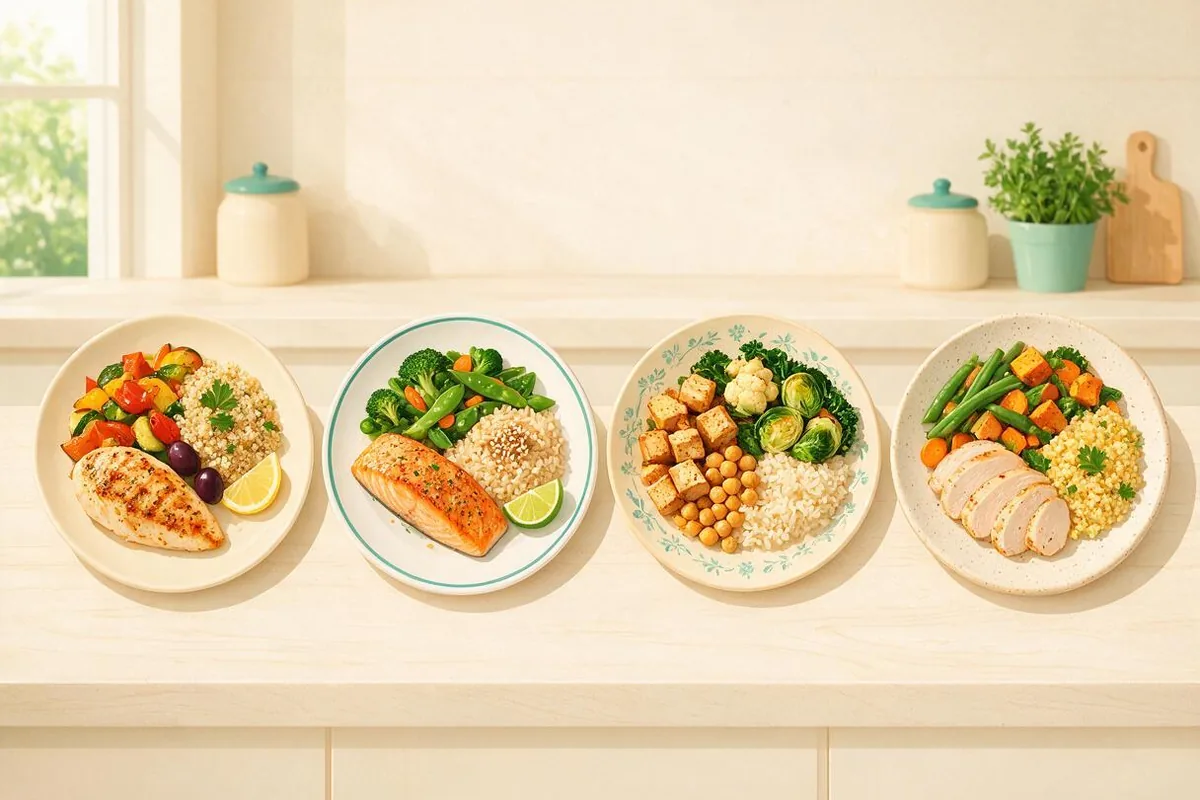
There’s no single best diet, only the one you’ll actually follow. Every popular approach works by creating the same calorie deficit through a different rule set. Pick the one whose rules feel livable to you, because adherence beats theory every time. Here’s an honest comparison none of the big sites lay out cleanly in one place.
| Method | How it creates the deficit | Adherence difficulty | Best for | Watch out for |
|---|---|---|---|---|
| Calorie counting | You track and cap intake directly | Medium; needs logging | People who like data and precision | Burnout from logging every bite |
| High-protein whole foods | Filling foods crowd out extra calories | Low once it’s a habit | Hunger-driven eaters | Slower without any portion sense |
| 16:8 intermittent fasting | A shorter eating window trims intake | Medium; social meals clash | People who dislike breakfast | Overeating in the window erases it |
| Low-carb | Cutting carbs lowers calories and appetite | Medium to high | Carb-heavy eaters, big appetites | Water-weight regain if carbs return |
| Mediterranean pattern | Whole foods, healthy fats, portion sense | Low; very flexible | Long-term health, families | Olive oil calories add up fast |
| Plate method | Half veg, quarter protein, quarter starch | Very low; no counting | Anyone who hates tracking | Portion drift on the starch quarter |
If you’re not sure, start with the plate method or high-protein whole foods. Both create a deficit without an app, and you can layer counting on top later if the scale stalls and you need to see the numbers. The worst method is the one you pick because it’s trendy and quit in three weeks.
Where are your hidden calories hiding?
Most stalled diets aren’t failing because the plan is wrong. They’re failing because a few hundred calories a day sneak back in through gaps you don’t notice. This leak audit is the single most useful table on this page, because plugging two or three of these often restores your whole deficit without eating “less” in any way you’d feel.

| Common leak | Typical hidden cost | The quiet fix |
|---|---|---|
| Liquid calories (soda, juice, fancy coffee) | 150-450 cal/day | Switch to water, black coffee, or diet versions |
| Cooking oils and butter | 100-300 cal/day | Measure oil with a spoon, not a free pour |
| Bites, licks, and tastes while cooking | 100-200 cal/day | Chew gum while you cook, or plate a tasting bite |
| Weekend drift | 500-1,500 cal over two days | Hold weekdays tight so weekends have room |
| Restaurant portion inflation | 200-600 cal/meal | Box half at the start, or split an entree |
| ”Healthy” halo foods (granola, smoothies, nuts) | 150-400 cal/day | Portion them like treats, because calorie-wise they are |
| Dressings, sauces, and spreads | 100-250 cal/day | Order them on the side and dip, don’t drench |
Add just three of these up and you’re often looking at a full 500-calorie leak, exactly the deficit you thought you had. That’s why people swear they “barely eat” and don’t lose. They’re not lying, they’re leaking. Before you cut your target lower, plug the leaks first. It’s less miserable and it usually works.
How do you build weight-loss habits that stick?
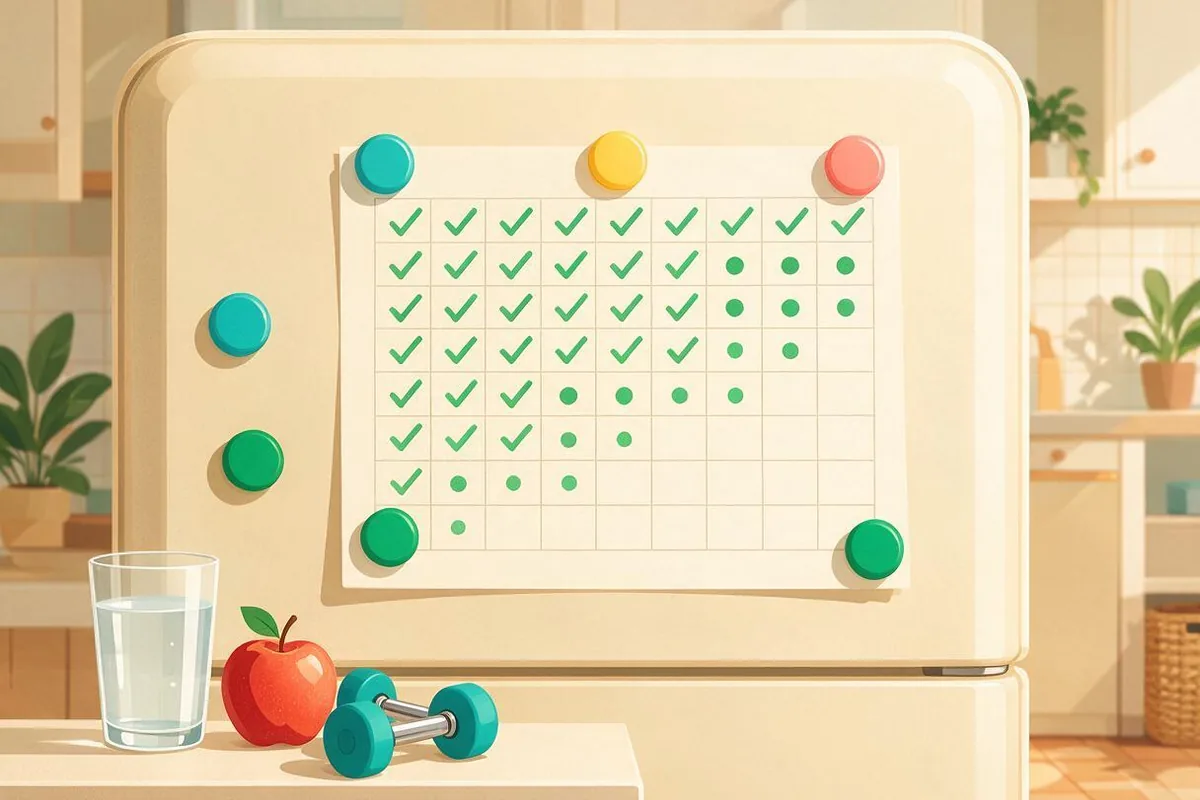
The classic mistake is overhauling everything on Monday: new diet, gym membership, no sugar, meal prep, the works. By Thursday it collapses because it demanded too much change at once. Habits stick when you add one at a time and let each become automatic before stacking the next. Here’s an 8-week sequence ordered by payoff for the effort, so early wins carry you.
| Week | Add this one habit | Why it’s first (or later) |
|---|---|---|
| 1 | Protein at every meal | Kills hunger, protects muscle, biggest early payoff |
| 2 | Water instead of liquid calories | Plugs the fastest, easiest leak |
| 3 | A 20-30 minute daily walk | Raises your burn without gym stress |
| 4 | Half your plate as vegetables | Fills you up for almost no calories |
| 5 | A consistent sleep window | Tames the hunger hormones that sabotage week 6 |
| 6 | Two short strength sessions | Now that energy’s steady, protect muscle |
| 7 | Plan and prep weekend meals | Closes the biggest remaining leak |
| 8 | Weekly weigh-in and trend check | Turns the whole thing into a feedback loop |
By week eight you haven’t “gone on a diet,” you’ve rebuilt your defaults. Each habit is small enough to keep on a bad day, and together they create the deficit and hold it. If a week doesn’t stick, don’t skip ahead. Repeat it until it’s automatic, then move on. Slow habit-building is the opposite of a crash diet, and it’s why it lasts.
How much protein and movement do you actually need?
Two levers punch far above their weight during a cut: protein and daily movement. Protein is the most filling macronutrient and it protects your muscle while fat comes off, which keeps your metabolism from sagging. Aim for roughly 0.7 to 1 gram per pound of your goal body weight, spread across meals so your body has a steady supply. Here’s what that works out to at a few common goal weights, so you’re not doing the math in your head.
| Goal body weight | Daily protein target | Roughly equals |
|---|---|---|
| 130 lb | 90-130 g | 3-4 palm-sized protein servings |
| 150 lb | 105-150 g | 4 servings, one at each meal plus a snack |
| 180 lb | 125-180 g | 4-5 servings across the day |
| 200 lb | 140-200 g | 5 servings, protein-forward every meal |
Don’t stress about hitting the top of the range every day. Landing near the bottom still protects most of your muscle, and it’s far better than the token amount most people eat while dieting. Front-load protein at breakfast if hunger tends to ambush you later, since a protein-light morning is what sets up the afternoon vending-machine raid.
Movement matters most in a form people underrate: NEAT, the calories you burn walking, standing, fidgeting, and doing chores. It often dwarfs your gym sessions. Someone who hits 9,000 steps and takes the stairs can burn several hundred more calories a day than a desk-bound sitter, no workout required. That’s the real answer to losing weight without a gym. Structured exercise still helps, especially strength training two or three times a week, because it tells your body to keep the muscle and burn the fat. Cardio adds to the deficit and lifts your mood, but you can’t reliably out-exercise a leaky diet, so let food lead and let movement support.
If you want to see how much your activity level changes your daily burn, plug your details into the TDEE calculator and compare the sedentary and active rows. The gap between them is your NEAT opportunity in plain numbers. Good sleep belongs in this section too, because short sleep raises hunger and cravings the next day, and our guide on how to fall asleep fast covers the fixes that help.
Why does weight loss slow down over time?
Almost everyone hits a point where the same effort stops paying the same pounds, and it rattles them. It shouldn’t, because it’s physics, not failure. As you lose weight, a lighter body burns fewer calories doing everything, so the deficit you set months ago quietly shrinks. Your metabolism also adapts a few percent downward. The result is a predictable difficulty curve: the first stretch is generous, the last stretch is stingy.
| Stage of the journey | What to expect | Why it happens |
|---|---|---|
| First 2 weeks | Fast drop, partly water | Glycogen and sodium shifts, not just fat |
| First 10-20 lb | Steady, motivating loss | Big body, big burn, deficit feels effortless |
| Middle stretch | Loss slows, needs tighter habits | Lighter body burns less; leaks matter more |
| Last 5-10 lb | Slowest and hardest | Small deficit, tiny margin for error |
The move that keeps you off the plateau isn’t eating dramatically less, it’s recalculating your maintenance every 10 pounds and re-subtracting your deficit from the new, smaller number. A two-minute check with the calorie calculator at each checkpoint keeps the gap real. Dieters who never update their target usually stall around month three and blame their willpower, when the truth is they’re now eating at their new maintenance without knowing it. Expect the last ten pounds to take as long as the first thirty, and you won’t quit when they do.
How do you keep the weight off?
Losing weight is a project with an end date. Keeping it off is the rest of your life, and it’s where most diets fail, because they were never survivable in the first place. The people who maintain don’t graduate back to how they ate before. They keep the habits that got them there, just with a little more food.
When you hit your goal, add calories back slowly, about 100 to 200 a week, until the scale holds steady. That’s your new maintenance, and it’ll sit a bit lower than it did at your heavier weight. Keep weighing in weekly, because catching a three-pound creep is easy and catching a twenty-pound one is another diet. Hold the protein, keep the daily walk, keep the plate structure. The reason the calorie calculator has a “maintain” setting is that maintenance is a target you steer toward, not a finish line you cross. Weight you lose slowly with habits you actually like is weight that tends to stay gone, and that’s the whole point of doing it the healthy way.
Frequently asked questions
The safe ceiling is about 1 to 2 pounds a week, which comes from a daily gap of roughly 500 to 1,000 calories under what you burn. You can front-load the first week, when a chunk of the drop is water rather than fat, but you can't rush fat loss past that pace without risking muscle, mood, and the odds you keep it off. If a plan promises 10 pounds in a week, it's selling water loss and a rebound. Pick the fastest pace your body tolerates without constant hunger or crashing energy, then hold it.
The most natural approach is the one you barely notice: build meals around protein and vegetables, drink your calories rarely, move more through the day, and sleep enough that hunger hormones behave. None of that requires a branded diet or a supplement. A calorie deficit still has to exist for the fat to leave, but you can reach it by changing what fills your plate instead of weighing every gram. Natural doesn't mean effortless, it means habits you can keep for years.
Yes. Weight loss is driven by eating less than you burn, and diet does most of that work. People lose plenty by fixing portions, cutting liquid calories, and adding everyday movement like walking and standing. Exercise earns its keep for a different reason: it protects muscle while you lose, lifts your mood, and improves your health markers. So you can skip the gym and still shrink, but keeping some strength work in the mix means more of what you lose is fat, not muscle.
Plan on 4 to 8 pounds for most people, matching the 1-to-2-pound weekly pace. Heavier people and those just starting often drop faster at first, partly water, while leaner people move slower. Chasing more than 8 pounds a month usually means an aggressive cut that's hard to sustain and tends to cost muscle. Slower loss protects your metabolism and your results. The scale that falls gently is the one that stays down.
After three flat weeks, the deficit usually isn't as real as it feels. Untracked oils, bites while cooking, splashes of cream, and relaxed weekends quietly close a 500-calorie gap. New exercise or salty meals can also hold water for a couple of weeks and mask fat loss on the scale. Recheck your maintenance number at your current weight, tighten what you're tracking for two weeks, and the downward trend almost always reappears.
No, though counting is the fastest way to learn your portions. The deficit has to exist, but you can create it with structure instead of an app: fixed go-to meals, a protein-and-vegetable base, smaller starchy portions, and keeping trigger foods out of the house. Many people count for a few weeks to calibrate their eye, then drop the app and hold results on habits alone. Count if it helps you debug a stall, not because you think it's mandatory.
Favor foods that fill you up for their calories: lean protein like chicken, fish, eggs, and Greek yogurt, plus non-starchy vegetables, fruit, beans, and whole grains. These carry protein, fiber, and water, so they satisfy on fewer calories. You don't have to ban anything, but liquid calories and ultra-processed snacks slip past your fullness signals, so keep those occasional. Build the plate around the filling foods first and the rest tends to sort itself out.
Calcowa's editorial team builds and checks every calculator against published formulas, then writes these guides so the numbers make sense. Each tool shows its formula and a worked example. See our methodology.
Related guides
Target Heart Rate Zones for Fat Loss
Target heart rate zone for fat loss runs about 60 to 70 percent of your max heart rate, but higher zones burn more total fat. Get the full chart and math.
Health & FitnessCalories Burned Walking: A Complete Guide
Calories burned walking depends on your weight, pace, and incline. A 155-pound person burns about 86 calories per mile at a moderate pace. See the charts.
Health & FitnessWhat Is a Healthy Body Fat Percentage?
A healthy body fat percentage depends on your sex and age. See the full range charts, how to measure yours accurately, and why it beats BMI as a marker.