
How to Pay Off Your Auto Loan Faster
How to pay off your auto loan faster: five strategies tested on one $28,000 loan, with tables showing how many months and how much interest each one saves.
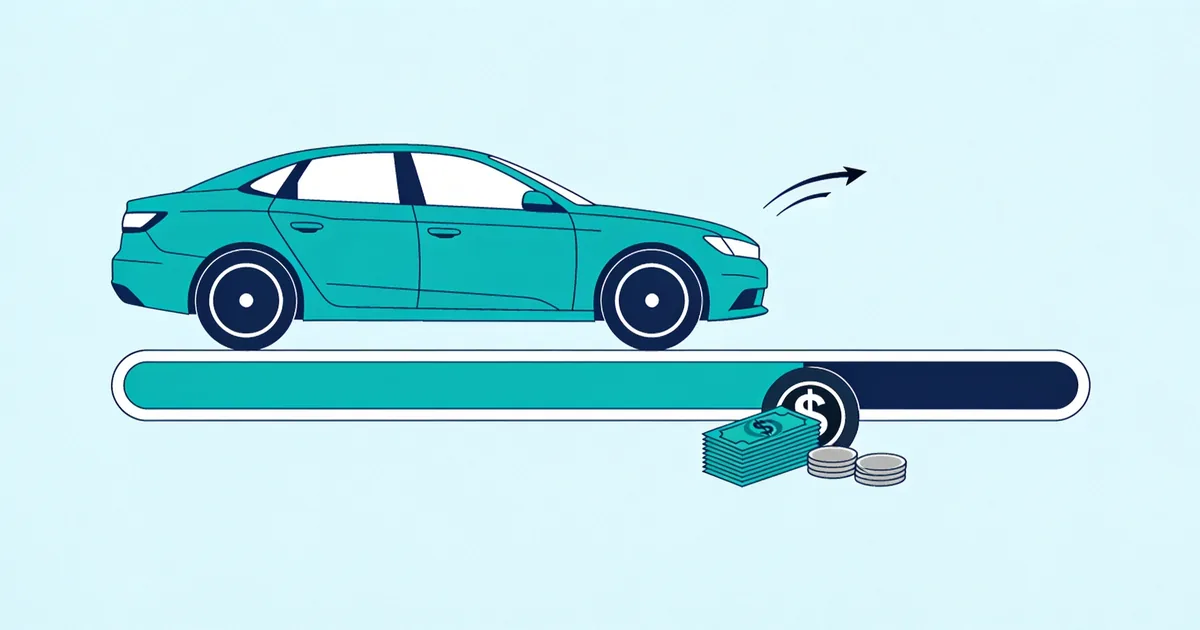
Short answer: you pay off your auto loan faster by sending extra money directly at the principal, and the method matters less than the consistency. On the $28,000 example loan we’ll use throughout this guide, an extra $100 a month clears the debt 15 months sooner and saves $1,472 in interest. This guide compares five acceleration strategies on that same loan, so you can see exactly which one buys the most months and dollars, then shows you how to make sure your extra payments actually hit the principal.
Want your own numbers instead of an example? Enter your balance, rate, and term into our auto loan payoff tool and test any extra payment against your real loan.
This is general information to help you plan, not personalized financial advice.
Does paying extra on a car loan actually reduce interest?
Yes, on almost every modern auto loan. The vast majority are simple-interest loans, which means interest is charged only on your remaining balance. Shrink the balance ahead of schedule and every future month charges you less.
Here’s the loan we’ll follow through this whole article. It’s built to look like a typical 2026 financing deal: a six-year term, a mid-range rate, and a payment under $500.
| Detail | Amount |
|---|---|
| Amount financed | $28,000 |
| APR | 7.5% |
| Term | 72 months |
| Monthly payment | $484 |
| Total interest if paid on schedule | $6,857 |
Now look inside that first $484 payment. At 7.5%, the interest charge on a $28,000 balance is $175 for the month. Only $309 actually reduces what you owe. That split is the whole game: any extra dollar you send skips the interest line entirely and lands on principal, which permanently shrinks every interest charge that follows.
That’s also why the same $100 does more damage early in the loan than late. In year one, your balance is at its peak and so is the monthly interest bill. Extra payments made in the first two years are the cheapest months you’ll ever buy back.
How much faster can extra payments pay off your auto loan?
Here’s the table the bank never shows you: the same $28,000 loan with five different extra-payment levels, run through a standard amortization schedule.
| Extra per month | New payoff time | Months saved | Interest saved |
|---|---|---|---|
| $0 (baseline) | 72 months | 0 | $0 |
| $25 | 68 months | 5 | $440 |
| $50 | 64 months | 9 | $826 |
| $100 | 58 months | 15 | $1,472 |
| $200 | 48 months | 25 | $2,416 |
| $300 | 41 months | 32 | $3,073 |
Two things jump out. First, even $25 a month, roughly one skipped takeout order a week, buys back five months. Second, the returns scale almost linearly, so there’s no magic threshold you need to reach. Whatever surplus your budget genuinely produces is worth sending.
The savings also grow with the size of the loan, because bigger balances carry bigger interest charges. Here’s what the same $100 extra does across five loan sizes, all at 7.5% for 72 months:
| Loan amount | Base payment | Months saved with +$100 | Interest saved |
|---|---|---|---|
| $15,000 | $259 | 24 | $1,237 |
| $20,000 | $346 | 20 | $1,354 |
| $28,000 | $484 | 15 | $1,472 |
| $35,000 | $605 | 13 | $1,539 |
| $45,000 | $778 | 11 | $1,605 |
If your rate or term is different, the pattern holds but the exact numbers won’t. It takes about a minute to run your own payoff scenario with your real balance and see your date.
Which payoff strategy saves the most money?
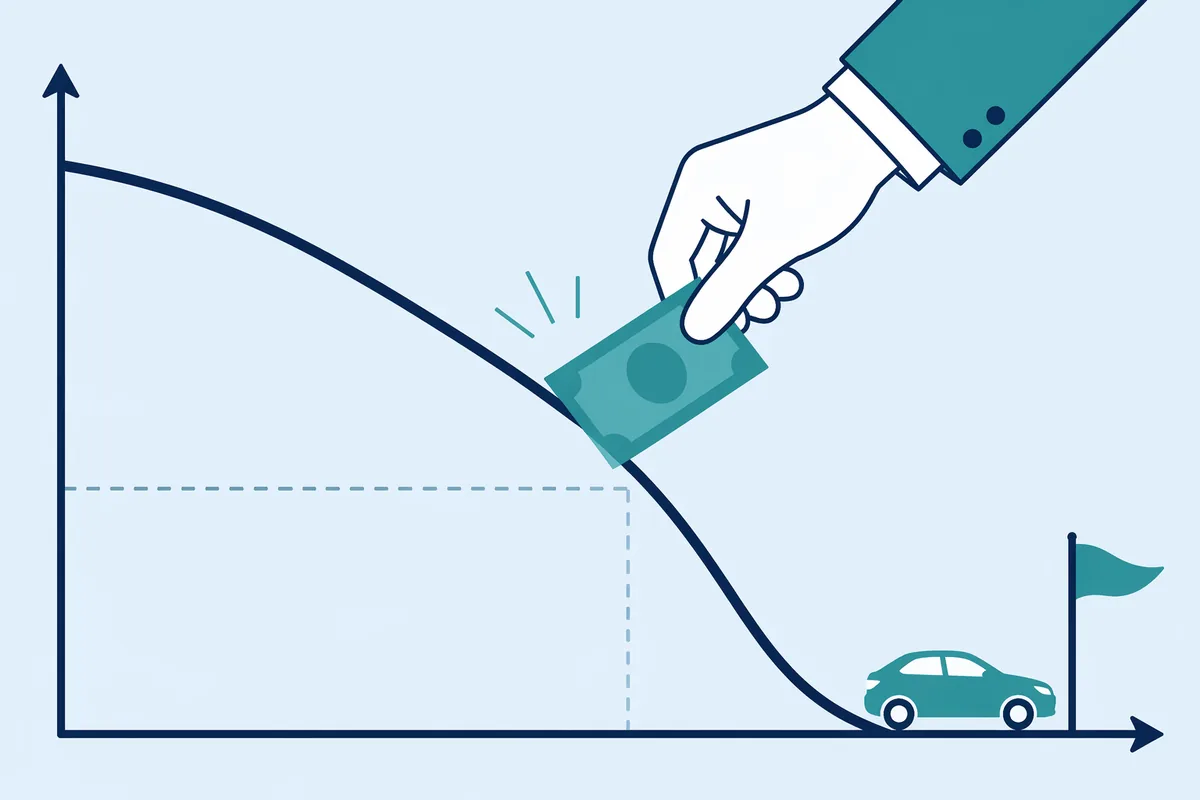
Round-ups, biweekly payments, lump sums, refinancing: every guide lists them, but almost none puts them head-to-head on the same loan. So here they are, ranked by interest saved on our $28,000 example.
| Strategy | What it looks like | Months saved | Interest saved |
|---|---|---|---|
| Round up to $500 | +$16/month | 3 | $286 |
| Biweekly payments | Half payment every 2 weeks | 7 | $683 |
| Annual $1,000 lump sum | Tax refund or bonus, once a year | 13 | $1,068 |
| Extra $100 every month | Fixed budget line | 15 | $1,472 |
| Refinance to 6% after year one | New 48-month loan at $567/month | 12 | $1,812 |
| Biweekly + $1,000 annual lump | Combined habit | 17 | $1,552 |
A few honest observations from that table. The round-up is the weakest performer but also the only one you’ll never feel, so treat it as a floor, not a plan. The refinance saves the most interest per move, but it only works if your credit or market rates genuinely improved, and it raises the monthly payment. The steady $100 beats the once-a-year $1,000 lump even though the annual totals are close, because money that arrives earlier in the year starts cutting interest sooner.
And the strategies stack. Biweekly payments plus a once-a-year lump sum clears this loan 17 months early without ever feeling like a second bill.
If the car loan isn’t your only debt, the order matters more than the method. A credit card charging 24% destroys any savings you’d get prepaying a 7.5% car loan, so clear the expensive debt first. Our guide on how to get out of debt walks through that sequencing with a full four-debt example.
How do biweekly car payments work?
The biweekly trick deserves its own explanation because the math surprises people. You don’t pay more per paycheck; you just pay more often.
Split your $484 monthly payment in half: $242. Pay that every two weeks. A year contains 52 weeks, which means 26 half-payments, which equals 13 full payments. You’ve made one entire extra payment without ever writing a bigger check, and it syncs perfectly with a biweekly paycheck.
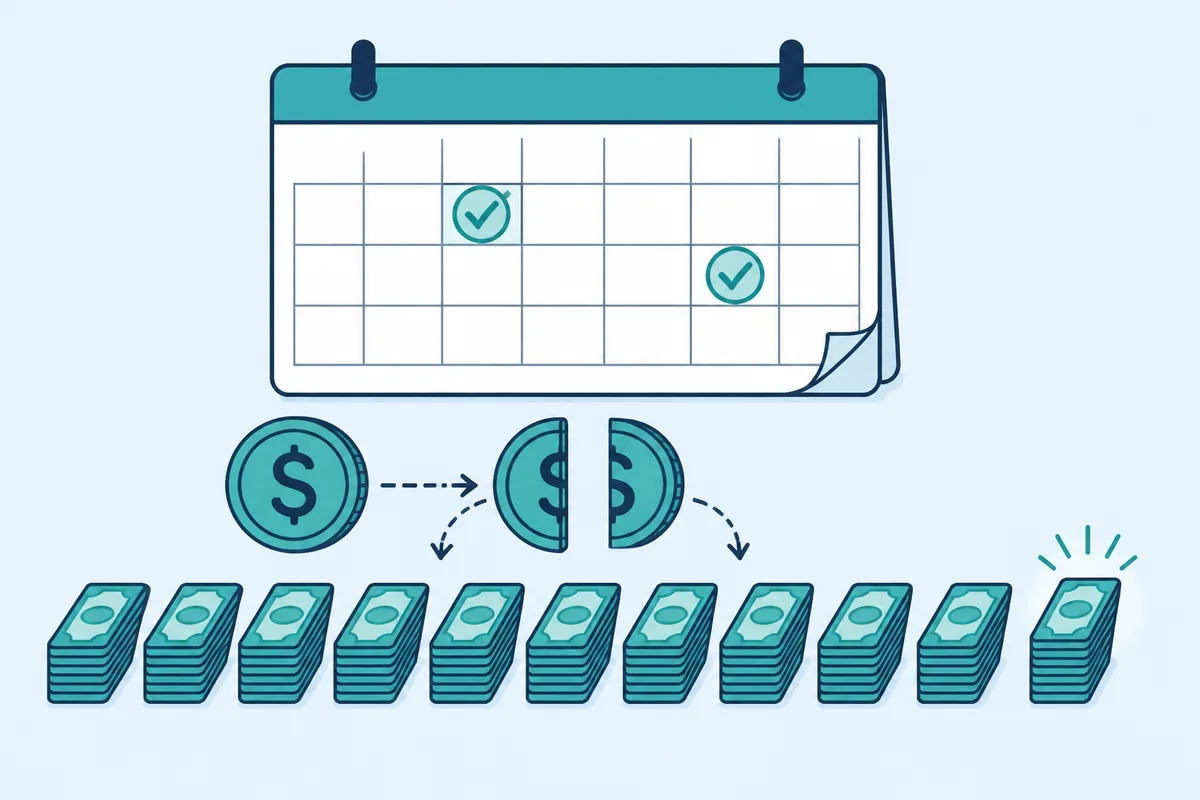
On our example loan, that quiet 13th payment shaves 7 months off the term and saves $683 in interest. There’s a second, smaller benefit too: because half your payment arrives mid-cycle, your average daily balance runs slightly lower, and on a simple-interest loan that trims the interest accrual a little further.
One warning before you set it up. Some lenders hold partial payments in a suspense account and only apply them when the full monthly amount accumulates, which kills the mid-cycle benefit. Ask your servicer directly: “Do you apply partial payments to my balance on the day they’re received?” If the answer is no, skip the biweekly gimmick and just add the equivalent extra (one-twelfth of your payment, about $40 here) to your normal monthly amount instead. Same math, no games. Whatever your lender says, avoid third-party biweekly enrollment services that charge setup or per-transaction fees; they’re selling you arithmetic you can do for free.
How do you make sure extra payments go to principal?
This is the step most guides wave at and skip, and it’s where real money leaks. Sent carelessly, your extra $100 gets treated as an early payment of next month’s bill: the lender takes its scheduled interest cut and may even push your due date forward, saving you nothing.
Here’s the checklist that prevents that:
- Use the portal’s own toggle. Most lender apps have a “principal-only payment” or “apply extra to principal” option buried in the payment screen. Use it every time.
- Say it in writing when there’s no toggle. Mailing a check? Write “apply to principal only” on the memo line and include a note with your loan number.
- Make the call once. If neither option exists, phone the servicer: “I want all payments above my scheduled amount applied to principal, not advanced to future payments. Please note my account.” Two minutes, one time.
- Verify on the next statement. Your principal balance should drop by the full extra amount, and your next due date should NOT have moved forward. If the due date jumped, the money was misapplied; call and have it reversed.
While you’re checking statements, confirm which of these two loan types you actually have, because it changes whether prepaying helps at all:
| Simple interest loan | Precomputed interest loan | |
|---|---|---|
| How interest works | Accrues daily on remaining balance | Total interest fixed at signing |
| Extra payments | Cut future interest directly | Reduce balance but not the fixed charge |
| Early payoff benefit | Full savings, automatic | Partial refund at best (Rule of 78s) |
| Where you’ll find them | Nearly all bank and credit union loans | Some buy-here-pay-here and subprime lots |
| Worth prepaying? | Yes | Usually better to refinance out |
Your contract will say which one you have, and so will a quick call. If you’re stuck in a precomputed loan, extra payments are mostly wasted; refinancing into a simple-interest loan is the better escape route.
Should you refinance to pay off your car faster?
Refinancing posted the biggest single interest saving in our comparison table, $1,812, but it’s the one strategy that can backfire, so it deserves its own sanity check.
The example worked because all three levers moved the right way: after a year of payments, the balance was down to $24,160, the new rate dropped from 7.5% to 6%, and critically, the new term was 48 months instead of the 60 that remained. The payment rose from $484 to $567, and the total interest across both loans came to about $5,045 instead of $6,857.
Refinancing tends to make sense when at least one of these is true:
- Your credit score has climbed since you signed, especially if you financed at a dealership markup.
- Market rates have dropped meaningfully below your APR.
- You originally took an 84-month term and can now afford the payment on a shorter one.
And it usually backfires when the new loan stretches the term back out. Rolling 60 remaining months into a fresh 72-month loan can lower your payment while increasing your total interest, which is the opposite of the goal. Watch for origination fees and state title-transfer costs too; they come off the top of any savings. Before signing anything, compare both loans side by side using the total-interest figure, not the monthly payment.
When should you NOT pay off a car loan early?
Prepaying a car loan is a good default, not a universal rule. Here’s the honest decision table:
| Your situation | Better move than prepaying |
|---|---|
| Credit card or payday debt at 15%+ APR | Attack that first; it costs double or triple your car rate |
| No emergency fund | Build at least a starter $1,000 buffer before extra car payments |
| Promotional 0% to 2.9% APR loan | Pay minimums; savings interest beats your loan rate |
| Loan has a prepayment penalty | Check the fee math first (rare, but it exists) |
| Precomputed interest contract | Refinance out instead of prepaying into it |
| Owe more than the car is worth | Prepay TO escape negative equity, but keep GAP insurance until you’re above water |
The negative-equity case deserves one extra sentence. If you’re underwater, extra principal payments are actually one of the fastest ways to get right-side up, but don’t cancel GAP coverage until your balance drops below the car’s value, because a totaled car with a gap and no GAP is a bill with no vehicle attached.
If several of these rows describe you at once, zoom out from the car and sequence all your debts properly. That’s exactly what our credit card payoff guide and the debt snowball planner are built for.
What if you can’t afford the car payment at all?
Acceleration guides usually pretend everyone has surplus cash. If you’re reading this because the payment itself is the problem, the options run in roughly this order: call the servicer before you miss a payment and ask about hardship deferment or a due-date change, check whether refinancing to a longer term buys survivable breathing room (yes, that’s the opposite advice from the rest of this guide, and that’s fine, solvency comes first), consider selling the car yourself if you have equity, since private sale prices usually beat repossession outcomes by thousands, or trade down to a cheaper vehicle. Voluntary surrender is the last resort before repossession; both wreck your credit, but surrendering at least avoids towing and auction fees being added to what you still owe.
Once the payment fits your budget again, come back to the acceleration playbook above. The strategies don’t expire.
The bottom line
Every method in this guide is the same move wearing different clothes: get extra dollars onto the principal as early and as often as your budget allows. Round-ups are effortless, biweekly payments hide an extra payment inside your paycheck rhythm, lump sums turn windfalls into equity, a fixed monthly extra beats all of them per dollar, and a well-timed refinance can compound the whole plan. On a typical $28,000 loan, the difference between coasting and a modest $100-a-month habit is 15 months of payments and about $1,472 that stays in your pocket.
Your loan isn’t the example loan, though. Put your real balance, rate, and payment into the payoff planner, test two or three of these strategies against it, and pick the one your budget will actually sustain. Then make the principal-only phone call and let the amortization math do the rest.
Frequently asked questions
Compare the two rates. If your loan APR is higher than what your savings account pays, extra payments win: a 7.5% loan costs you more than a 4% savings account earns, guaranteed and tax-free. Flip it around for cheap loans. If you locked in a 0% to 3% promotional APR, minimum payments plus a high-yield savings account usually come out ahead. Either way, keep a small emergency fund first so a surprise repair doesn't land on a credit card.
Sometimes there's a small, temporary dip. Closing the loan removes an active installment account, which can reduce your credit mix and your count of open accounts with payment history. The dip is usually minor and fades within a few months, while the money you save in interest is permanent. If you're applying for a mortgage in the next 60 days, you might wait; otherwise the savings almost always outweigh a few points.
The lender releases its lien on the vehicle. Depending on your state, you'll receive the physical title, a lien release letter, or an electronic title update within a few weeks. Keep the payoff letter, confirm the lien shows as released with your DMV, and call your insurer: you're no longer required to carry the collision and comprehensive levels your lender demanded, though keeping them is often still smart.
Yes, and it's one of the easiest acceleration tricks. Paying half your monthly amount every two weeks produces 26 half-payments a year, which equals 13 full payments instead of 12. On our example $28,000 loan, that one extra payment a year clears the loan about 7 months sooner and saves roughly $683 in interest. Just confirm your lender applies partial payments right away rather than holding them until month end.
There's no required waiting period, and interest accrues daily on most auto loans, so mathematically sooner is better. The only timing wrinkles are a prepayment penalty (rare, but check your contract), a precomputed-interest loan where early payoff earns less than you'd expect, and credit-building goals where 6 to 12 months of on-time payments add useful history. Absent those, start attacking the principal with your very next payment.
Three real ones. First, liquidity: money sent to the loan is locked in the car, and you can't easily get it back in an emergency. Second, opportunity cost: if the APR is very low, that cash could earn more elsewhere or clear a 24% credit card instead. Third, a possible small credit-score dip when the installment account closes. What's not a real disadvantage is interest already paid: on a simple-interest loan you only ever owe interest on the remaining balance.
Only the savings above your emergency fund. Draining your whole cushion to kill a 7% loan trades a guaranteed problem for a possible one: the next transmission repair or job gap goes straight onto a 24% credit card. A good order: keep 3 to 6 months of expenses (or at least $1,000 as a bare-minimum starter buffer), clear any higher-APR debt first, then send the true surplus at the car in one principal-only lump.
Calcowa's editorial team builds and checks every calculator against published formulas, then writes these guides so the numbers make sense. Each tool shows its formula and a worked example. See our methodology.
Related guides
How Much House Can I Afford? The Real Math
How much house can I afford? Read your answer from a salary table, compare the 28/36 rule with three others, and see the real monthly cost before you buy.
FinanceHow to Get Out of Debt: A Realistic Plan
How to get out of debt with a plan that actually sticks: six steps, a real four-debt example, and snowball vs avalanche vs hybrid numbers side by side.
FinanceHow to Pay Off Credit Card Debt Fast
How do you pay off credit card debt fast? Compare the snowball and avalanche methods with a real worked example, and see which clears your cards sooner.