
How Many Tablespoons in a Cup? Full Chart
How many tablespoons in a cup? A US cup holds 16 tablespoons or 48 teaspoons. Get every fraction chart, butter stick math, and the awkward thirds workaround.
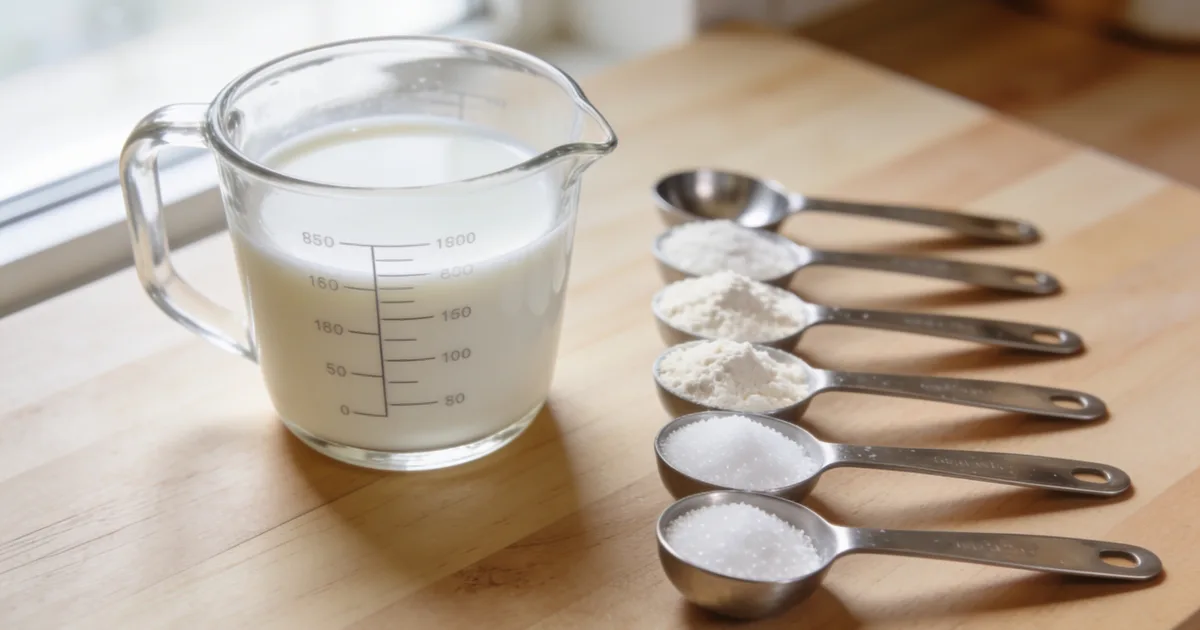
Short answer: how many tablespoons in a cup? A US cup holds exactly 16 tablespoons. That one number runs the whole system: 8 tablespoons fill half a cup, 4 fill a quarter cup, and each tablespoon breaks into 3 teaspoons when you need to go smaller. It works the same for liquids and dry ingredients, since both cups and spoons measure volume.
The trouble starts past the easy fractions. A third of a cup is 5 tablespoons plus 1 teaspoon, not a clean number. Butter arrives in sticks, not cups. And an Australian tablespoon is a third bigger than an American one, which quietly wrecks recipes that cross the Pacific. This guide covers the full chart, the awkward thirds, the butter stick decoder, spoon weights by ingredient, and what tablespoons mean in other countries.
If you just need one conversion done now, the tbsp to mL converter handles any spoon amount instantly, and the cups to mL converter covers the cup side.
How many tablespoons are in a cup?
One US cup equals 16 US tablespoons, which is also 48 teaspoons, 8 fluid ounces, or about 237 milliliters. Every cup fraction scales off that base, so here’s the complete chart, including the thirds that refuse to divide evenly:
| Cups | Tablespoons | Teaspoons | Milliliters |
|---|---|---|---|
| 2 cups | 32 tbsp | 96 tsp | 473 mL |
| 1 cup | 16 tbsp | 48 tsp | 237 mL |
| 3/4 cup | 12 tbsp | 36 tsp | 177 mL |
| 2/3 cup | 10 tbsp + 2 tsp | 32 tsp | 158 mL |
| 1/2 cup | 8 tbsp | 24 tsp | 118 mL |
| 1/3 cup | 5 tbsp + 1 tsp | 16 tsp | 79 mL |
| 1/4 cup | 4 tbsp | 12 tsp | 59 mL |
| 1/8 cup | 2 tbsp | 6 tsp | 30 mL |
| 1/16 cup | 1 tbsp | 3 tsp | 15 mL |
Three rows do most of the work in a real kitchen. Half a cup is 8 tablespoons, the fraction recipes call for most. A quarter cup is 4 tablespoons, which saves you washing another measuring cup for small amounts. And 2 tablespoons equal 1 fluid ounce, the bridge between spoon measures and the ounce lines printed on liquid measuring cups.
The chain behind the chart is worth 10 seconds of your attention, because once it’s in your head you’ll never look up the small conversions again: 3 teaspoons make a tablespoon, 16 tablespoons make a cup, so 48 teaspoons make a cup. Everything else in this article is that chain applied to awkward situations.
How many tablespoons in half a cup or a quarter cup?
Half a cup is 8 tablespoons. A quarter cup is 4 tablespoons. These two come up so often that they’re worth treating as facts you know rather than math you do.
The half-cup equivalence hides a bonus: 8 tablespoons is exactly one standard stick of butter. So when a cookie recipe wants half a cup of butter, you don’t measure anything. You unwrap one stick and you’re done. The quarter cup pairs the same way with half a stick.
There’s also a practical reason to measure small amounts with spoons instead of cups. Dry measuring cups need to be filled and leveled, and a quarter cup of a sticky ingredient like honey or peanut butter leaves a lot of itself behind in the cup. Four tablespoons, scraped clean one at a time, waste less and wash easier. For anything under half a cup, spoons are usually the better tool, not just the backup.
One caution on the other direction: don’t measure big volumes with spoons. Counting out 16 tablespoons of flour invites 16 small errors, and flour compresses a little more with every scoop. Past a quarter cup, switch to the measuring cup and level it once.
How do you measure 1/3 or 2/3 cup in tablespoons?
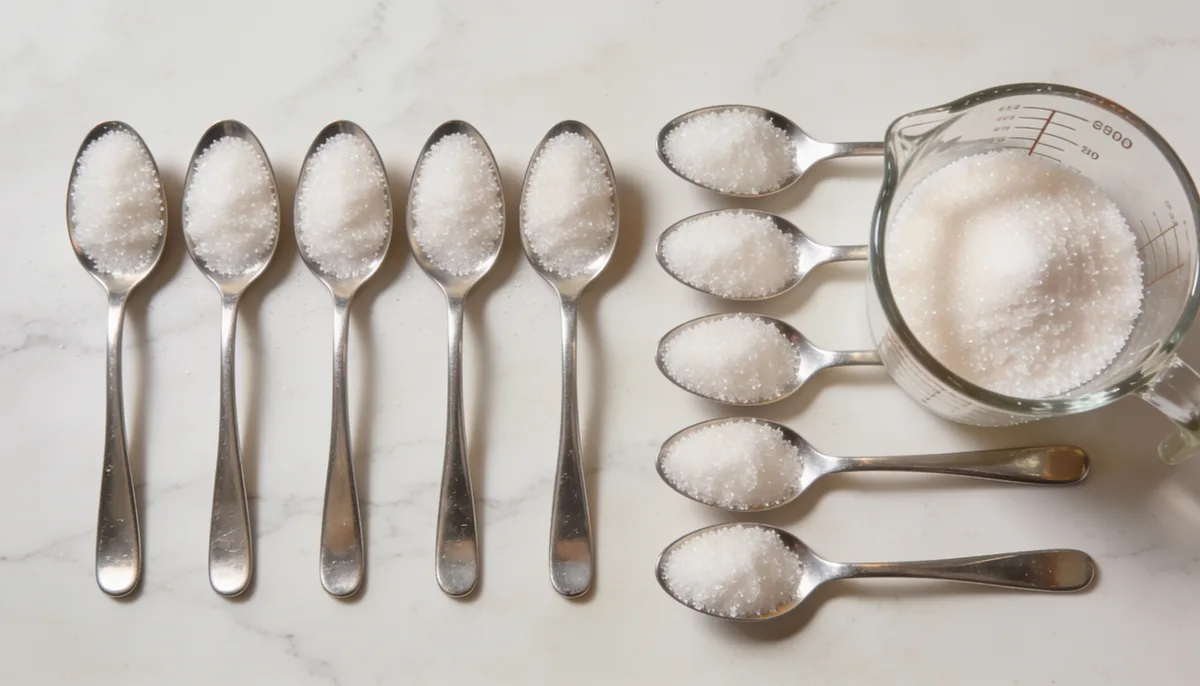
The thirds are where the tablespoon system creaks, because 16 doesn’t divide by 3. A third of a cup works out to 5.33 tablespoons, and no spoon in your drawer says 0.33. The fix is the teaspoon: that leftover third of a tablespoon is exactly 1 teaspoon.
So 1/3 cup = 5 tablespoons + 1 teaspoon, and 2/3 cup = 10 tablespoons + 2 teaspoons. Clunky to say, precise to measure.
Where this really earns its keep is scaling recipes. Halve a recipe that calls for 1/3 cup and you need a sixth of a cup, a measurement that exists on no tool you own. In tablespoons it’s trivial. Here’s the halving chart nobody prints on a measuring cup:
| Recipe calls for | Half of it | Measured as |
|---|---|---|
| 1 cup | 1/2 cup | 8 tbsp |
| 3/4 cup | 3/8 cup | 6 tbsp |
| 2/3 cup | 1/3 cup | 5 tbsp + 1 tsp |
| 1/2 cup | 1/4 cup | 4 tbsp |
| 1/3 cup | 1/6 cup | 2 tbsp + 2 tsp |
| 1/4 cup | 1/8 cup | 2 tbsp |
| 1 tbsp | 1/2 tbsp | 1.5 tsp |
Thirding a recipe follows the same trick: a third of 1 cup is 5 tablespoons plus 1 teaspoon, and a third of a half cup is 2 tablespoons plus 2 teaspoons. Once you see cup fractions as teaspoon counts (a cup is 48 teaspoons, so a sixth of a cup is 8 teaspoons, which is 2 tablespoons plus 2), any scaling problem turns into short division. The tsp to mL converter helps when a scaled amount needs to go metric.
How many tablespoons in a stick of butter?
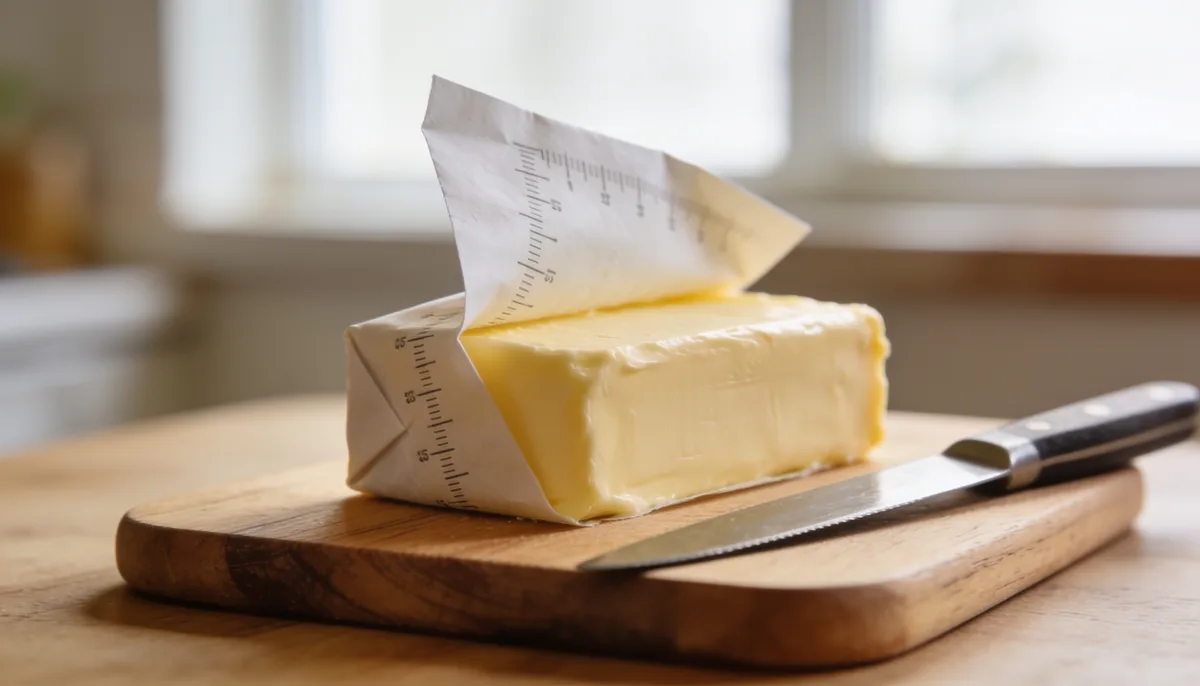
One standard US stick of butter is 8 tablespoons: half a cup, 4 ounces, 113 grams. Butter is the one ingredient where American packaging actually cooperates with the tablespoon system, because the wrapper prints a ruled scale marking each tablespoon. A recipe wants 3 tablespoons of butter? Slice at the third line. No spoon, no smearing, no cleanup.
The full stick math:
| Butter amount | Tablespoons | Cups | Weight |
|---|---|---|---|
| 1/2 stick | 4 tbsp | 1/4 cup | 2 oz / 57 g |
| 1 stick | 8 tbsp | 1/2 cup | 4 oz / 113 g |
| 2 sticks | 16 tbsp | 1 cup | 8 oz / 227 g |
| 3 sticks | 24 tbsp | 1 1/2 cups | 12 oz / 340 g |
| 4 sticks (1 lb box) | 32 tbsp | 2 cups | 16 oz / 454 g |
Two wrinkles worth knowing. First, stick shape varies by region: most of the US gets long, thin sticks, while the West Coast often gets short, stubby ones. The shape changes, the contents don’t. Both are 8 tablespoons. Second, imported European butter usually comes in 250 g blocks with no tablespoon markings at all, so for those you’re better off weighing: figure about 14 grams per tablespoon.
If your recipe lists butter in grams, the cups to grams converter translates any butter volume to weight in one step.
Does a tablespoon of flour weigh the same as a tablespoon of sugar?
Not even close, and this is where spoon conversions bite people. A tablespoon is a fixed volume, about 14.79 mL, but what that volume weighs depends entirely on the ingredient’s density. A tablespoon of flour is 7.5 grams. A tablespoon of honey is 21 grams. Same spoon, nearly triple the weight.
Here’s how common ingredients actually weigh out per level tablespoon:
| Ingredient (1 tbsp) | Grams | Per cup (16 tbsp) |
|---|---|---|
| Cocoa powder | 5.3 g | 85 g |
| All-purpose flour | 7.5 g | 120 g |
| Powdered sugar | 7.5 g | 120 g |
| Granulated sugar | 12.5 g | 200 g |
| Brown sugar (packed) | 13.8 g | 220 g |
| Olive oil | 13.5 g | 216 g |
| Butter | 14.2 g | 227 g |
| Water / milk | 14.8 g | 237 g |
| Table salt | 18.0 g | 288 g |
| Honey | 21.3 g | 340 g |
The pattern to notice: light, airy powders sit at the bottom of the scale and dense, wet ingredients sit at the top. Water is the reference point at 14.8 grams, and anything sticky or crystalline beats it.
This is also the answer to the “dry measure” question people ask constantly. Converting tablespoons to cups works identically for dry and liquid ingredients, because both units describe volume, and 16 spoonfuls of flour fill a cup the same way 16 spoonfuls of milk do. What you can’t do is convert spoons to grams or ounces with one universal number. For that, the ingredient decides, and the grams to tablespoons converter does the density lookup for you. Our guide on how many ounces are in a cup walks the same volume-versus-weight trap from the ounce side.
Are tablespoons the same size in the UK and Australia?
No, and this one ruins bakes quietly. “Tablespoon” names at least four different volumes depending on where the recipe was written:
| Standard | Milliliters | Teaspoons | Vs US tablespoon |
|---|---|---|---|
| US tablespoon | 14.79 mL | 3 tsp | Baseline |
| US legal (nutrition labels) | 15 mL | 3 tsp | +1.4% |
| Metric (UK, Canada, NZ) | 15 mL | 3 tsp | +1.4% |
| Australian tablespoon | 20 mL | 4 tsp | +35% |
| Old UK imperial spoon | 17.8 mL | 3.6 tsp | +20% |
The US and metric spoons are functionally identical; swap them freely. The Australian tablespoon is the real trap. It’s defined as 4 teaspoons rather than 3, so every tablespoon in an Australian recipe delivers 35% more than your US spoon holds. For a tablespoon of vanilla in a cake batter, nobody notices. For 3 tablespoons of baking powder across a doubled recipe, you’ll taste it.
The cup side shifts too. An Australian metric cup is 250 mL, and divided by the 20 mL spoon that’s 12.5 Australian tablespoons per Australian cup, not 16. So the “16 tablespoons in a cup” rule you just learned is a US rule, not a law of nature. When you’re cooking from a foreign recipe, the cleanest move is converting everything to milliliters with the tbsp to mL converter and measuring metric, since a milliliter means the same thing in Sydney, London, and Seattle.
Older British cookbooks add one more twist: pre-metric UK recipes used a rounded 17.8 mL spoon, and some traditional recipes assumed heaped rather than level spoonfuls. If a vintage recipe tastes under-spiced when you follow it exactly, that’s often why.
How do you convert tablespoons back to cups?
Divide by 16. That’s the whole formula: tablespoons ÷ 16 = cups. Twelve tablespoons is 12/16, which reduces to 3/4 cup. Here’s the reverse lookup for the amounts that actually show up:
| Tablespoons | Cups | Also equals |
|---|---|---|
| 1 tbsp | 1/16 cup | 3 tsp / 0.5 fl oz |
| 2 tbsp | 1/8 cup | 1 fl oz |
| 4 tbsp | 1/4 cup | 2 fl oz |
| 5 tbsp + 1 tsp | 1/3 cup | 2.67 fl oz |
| 8 tbsp | 1/2 cup | 1 stick butter |
| 10 tbsp + 2 tsp | 2/3 cup | 5.33 fl oz |
| 12 tbsp | 3/4 cup | 6 fl oz |
| 16 tbsp | 1 cup | 8 fl oz |
| 24 tbsp | 1 1/2 cups | 12 fl oz |
| 32 tbsp | 2 cups | 1 pint |
Odd counts work the same way. Say a scaled-up sauce recipe leaves you at 27 tablespoons: 27 ÷ 16 = 1.69 cups, which you’d measure as 1 cup plus 11 tablespoons, or more practically as 1 2/3 cups plus a teaspoon. Whenever the division gets ugly, measure the whole cups first and count spoons for the remainder.
And the three rules that settle nearly every spoon question at the counter:
- The chain: 3 teaspoons = 1 tablespoon, 16 tablespoons = 1 cup, 48 teaspoons = 1 cup. US measures, liquids and dry alike.
- The shortcuts: 8 tbsp = 1/2 cup = 1 stick of butter, 4 tbsp = 1/4 cup, 2 tbsp = 1 fl oz.
- The exceptions: thirds need teaspoons (1/3 cup = 5 tbsp + 1 tsp), weights need the ingredient’s density, and Australian spoons are 20 mL.
Volume only gets you so far in baking, though. For anything where texture matters, weighing beats spooning, and our cups to grams baking guide covers that side ingredient by ingredient. For quick one-off conversions in either direction, the mL to cups converter and the tbsp to mL converter turn any amount around instantly.
Frequently asked questions
There are 16 tablespoons in 1 US cup. That splits evenly down the line: 8 tablespoons make half a cup, 4 tablespoons make a quarter cup, and 2 tablespoons make an eighth of a cup, which is also 1 fluid ounce. The ratio holds for both liquid and dry ingredients because both measurements describe volume.
Half a cup is 8 tablespoons, which is also 4 fluid ounces or 24 teaspoons. It's one of the most useful equivalents to memorize because 8 tablespoons is exactly one standard stick of butter, so any recipe calling for half a cup of butter means one full stick.
One third of a cup is 5 tablespoons plus 1 teaspoon. It doesn't land on a whole number because 16 doesn't divide evenly by 3. The math works out to 5.33 tablespoons, and that leftover third of a tablespoon equals exactly 1 teaspoon, since 3 teaspoons make a tablespoon.
One standard US stick of butter is 8 tablespoons, which equals half a cup, 4 ounces, or 113 grams. The wrapper printing marks each tablespoon so you can slice without measuring. A full 1-pound box holds 4 sticks, or 32 tablespoons, which is 2 cups of butter.
There are 48 teaspoons in 1 US cup. The chain runs 3 teaspoons per tablespoon and 16 tablespoons per cup, so 3 times 16 gives you 48. Nobody measures a full cup in teaspoons, but the number matters for scaling small amounts, like turning 1/16 cup into 3 teaspoons.
No. A US tablespoon is 14.79 mL and a UK or metric tablespoon is 15 mL, which are close enough to swap. An Australian tablespoon is 20 mL, a full 4 teaspoons, so an Australian recipe's tablespoon holds about 35% more than yours. Check the recipe's origin before measuring spoonfuls.
Yes. Cups and tablespoons both measure volume, so 16 tablespoons fill 1 cup whether it's milk, flour, or rice. What changes with dry ingredients is weight: a tablespoon of flour weighs about 7.5 grams while a tablespoon of sugar weighs 12.5 grams, so never convert spoons to grams without checking the ingredient.
Calcowa's editorial team builds and checks every calculator against published formulas, then writes these guides so the numbers make sense. Each tool shows its formula and a worked example. See our methodology.
Related guides
How Many mL in a Cup? US, UK and Metric
How many mL in a cup? A US cup is 237 mL, a metric cup is 250 mL, and a UK cup holds 284 mL. Get the full chart, cup-size decoder, and rounding error math.
ConvertersHow Many Ounces in a Cup? Dry vs Liquid
How many ounces in a cup? A US cup is 8 fluid ounces, but dry ounces vary: a cup of flour weighs 4.2 oz, sugar 7.1 oz. Get the full charts and the fix.
ConvertersBaking Substitutes: Eggs, Butter, Dairy, Oil
Baking substitutes for eggs, butter, buttermilk, sour cream, heavy cream, milk, and oil, with exact ratios, gram weights, and a swap risk rating for each.