
How Many Ounces in a Cup? Dry vs Liquid
How many ounces in a cup? A US cup is 8 fluid ounces, but dry ounces vary: a cup of flour weighs 4.2 oz, sugar 7.1 oz. Get the full charts and the fix.
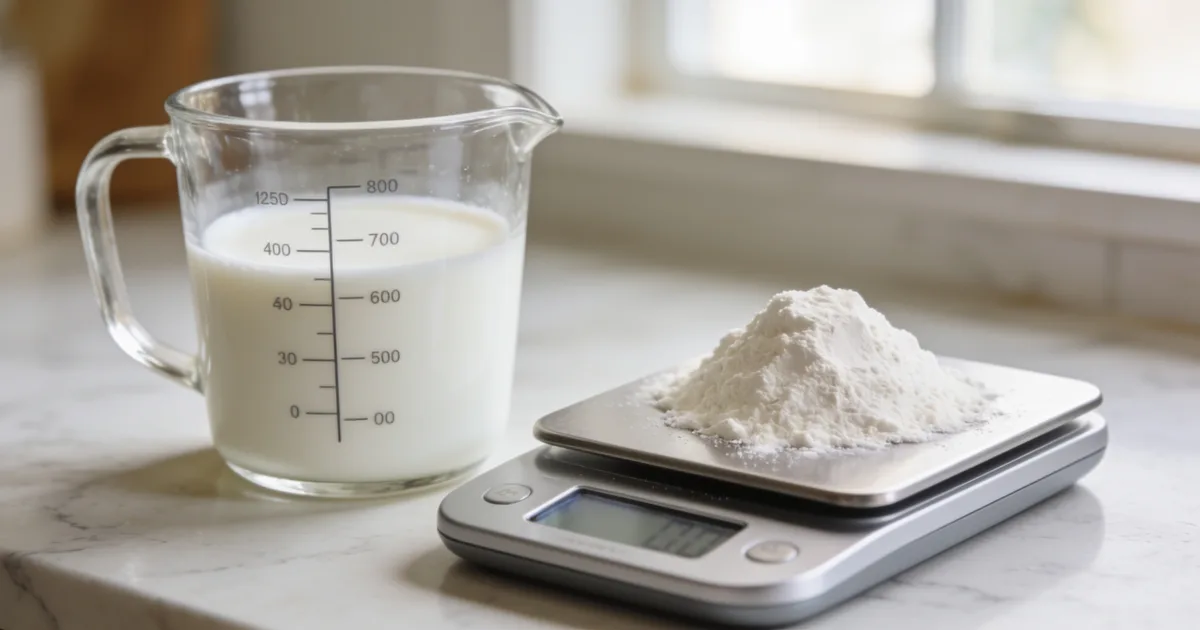
Short answer: how many ounces in a cup? A US cup holds 8 fluid ounces. That’s the whole story for water, milk, oil, and anything else that pours. For dry ingredients it falls apart fast: a cup of flour weighs just 4.2 ounces, a cup of honey weighs 12, and the “cup equals 8 ounces” rule quietly ruins recipes every day.
The catch is that ounces are two different units wearing the same name. Fluid ounces measure volume, weight ounces measure mass, and a cup only equals 8 of the first kind. This guide covers both, with charts for every cup fraction, real weights for 16 common ingredients, and a decoder for what “8 oz” actually means on a package label.
Need a one-off conversion right now? The cups to mL converter handles any amount instantly, and the cups to grams converter does the weight side per ingredient.
How many fluid ounces in a cup?
One US cup is exactly 8 US fluid ounces, which is also 16 tablespoons, 48 teaspoons, or about 237 milliliters. Every fraction of a cup scales in a straight line, so here’s the full chart, including the awkward thirds.
| Cups | Fluid ounces | Tablespoons | Milliliters |
|---|---|---|---|
| 2 cups | 16 fl oz | 32 tbsp | 473 mL |
| 1 cup | 8 fl oz | 16 tbsp | 237 mL |
| 3/4 cup | 6 fl oz | 12 tbsp | 177 mL |
| 2/3 cup | 5.33 fl oz | 10 tbsp + 2 tsp | 158 mL |
| 1/2 cup | 4 fl oz | 8 tbsp | 118 mL |
| 1/3 cup | 2.67 fl oz | 5 tbsp + 1 tsp | 79 mL |
| 1/4 cup | 2 fl oz | 4 tbsp | 59 mL |
| 1/8 cup | 1 fl oz | 2 tbsp | 30 mL |
Two rows earn a spot in your memory. Half a cup is 4 fluid ounces, since that’s the fraction recipes call for most, and 2 tablespoons make 1 fluid ounce, which lets you measure small amounts without dirtying another cup.
Notice the thirds don’t land on clean numbers. A third of a cup is 2.67 fluid ounces, which is why measuring spoon sets include that odd “5 tablespoons plus 1 teaspoon” workaround. When a recipe mixes cups and ounces in the same ingredient list, converting everything to one unit first saves you mid-recipe math.
Why isn’t a cup always 8 ounces?
Because “ounce” is two units that share a name. A fluid ounce measures volume, the amount of space something takes up. A weight ounce (the avoirdupois ounce, the one on your kitchen scale) measures mass. They were never designed to match, and for most ingredients they don’t.
A cup is a fixed amount of space: 8 fluid ounces, always. What that space weighs depends entirely on what’s in it. Fill the cup with feathers and it weighs almost nothing. Fill it with honey and it weighs 12 ounces. The cup didn’t change, the density did.
Water is the source of the confusion. One cup of water happens to weigh about 8.35 weight ounces, close enough to 8 that generations of cooks learned “a cup is 8 ounces” and assumed it covered everything. It doesn’t. It barely even covers water.
Here’s the difference laid out side by side:
| Fluid ounces | Weight (dry) ounces | |
|---|---|---|
| What it measures | Volume (space) | Mass (heaviness) |
| Tool that measures it | Measuring cup | Kitchen scale |
| Ounces in 1 cup | Always 8 | 3 to 12, depends on ingredient |
| Where you’ll see it | Milk, broth, juice labels | Flour bags, cheese blocks, meat |
| Metric cousin | Milliliters | Grams |
If a recipe says “8 fl oz,” grab a measuring cup. If it says “8 oz” next to a solid ingredient, it means the scale. That single reading habit prevents most conversion mistakes.
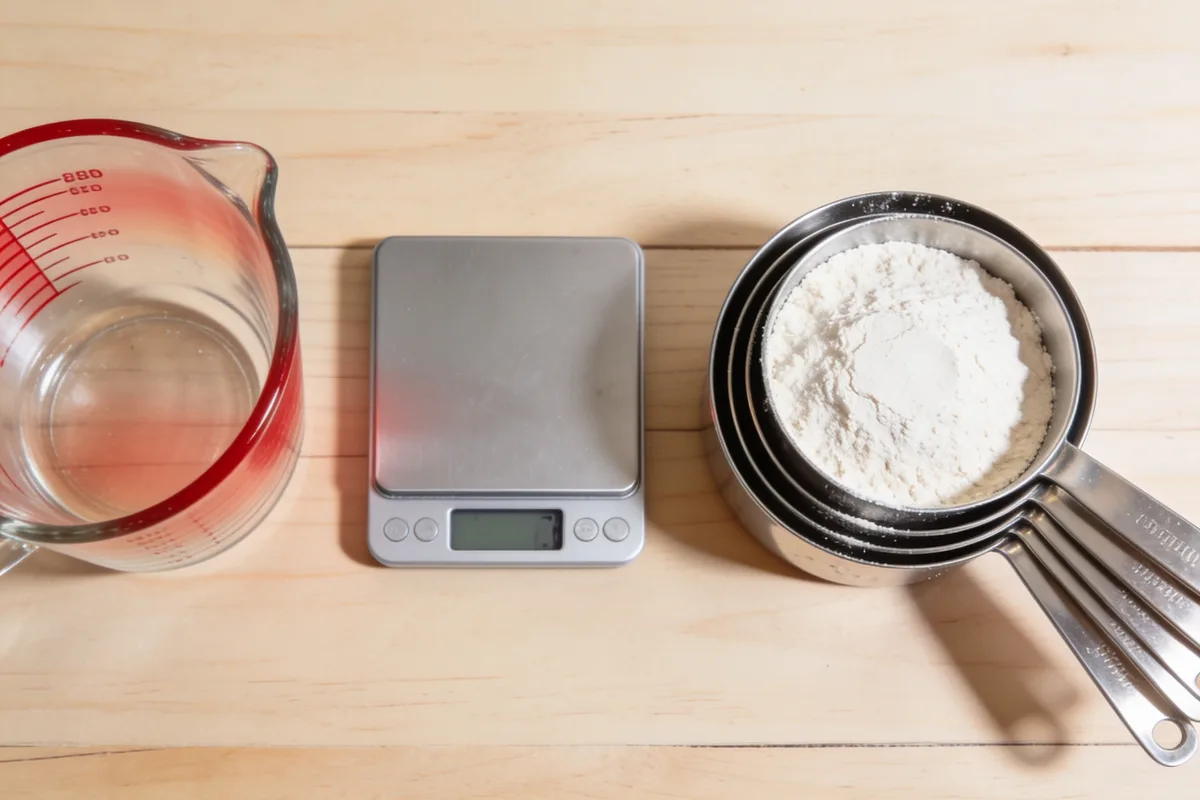
How many dry ounces in a cup?
It depends on the ingredient, and the spread is bigger than most people expect. Here are real per-cup weights for 16 kitchen staples, plus how far each one lands from the 8-ounce assumption. That last column is the error you bake into a recipe every time you treat a cup as 8 ounces.
| Ingredient (1 cup) | Weight in ounces | Grams | vs the “8 oz” myth |
|---|---|---|---|
| Cocoa powder | 3.0 oz | 85 g | 63% lighter |
| Rolled oats | 3.2 oz | 90 g | 60% lighter |
| Almond flour | 3.4 oz | 96 g | 58% lighter |
| Cake flour | 4.0 oz | 114 g | 50% lighter |
| All-purpose flour | 4.2 oz | 120 g | 48% lighter |
| Powdered sugar | 4.2 oz | 120 g | 48% lighter |
| Cornstarch | 4.2 oz | 120 g | 48% lighter |
| Bread flour | 4.5 oz | 127 g | 44% lighter |
| Whole wheat flour | 4.6 oz | 130 g | 43% lighter |
| Chocolate chips | 6.0 oz | 170 g | 25% lighter |
| White rice (uncooked) | 6.5 oz | 185 g | 19% lighter |
| Granulated sugar | 7.1 oz | 200 g | 11% lighter |
| Brown sugar (packed) | 7.8 oz | 220 g | 3% lighter |
| Butter | 8.0 oz | 227 g | Exact match |
| Peanut butter | 9.1 oz | 258 g | 14% heavier |
| Honey | 12.0 oz | 340 g | 50% heavier |
Butter is the lone ingredient where the myth holds: two sticks fill one cup and weigh exactly 8 ounces. Everything else misses, and flour misses by nearly half. If you’ve ever substituted “8 ounces of flour” for “1 cup of flour,” you added almost double what the recipe wanted, and that’s a dense, dry cake.
The fix costs nothing: when a recipe gives dry ingredients in ounces or grams, use a scale. When it gives cups, use cups. Our sibling guide on how many grams are in a cup covers the same table from the metric side, and the cups to grams converter does the lookup for you per ingredient.
Does “8 oz” on a package mean weight or volume?
Grocery labels use both kinds of ounce, and the packaging tells you which. US labeling rules put net weight ounces on solids and fluid ounces on liquids. The words to scan for are “NET WT” versus “FL OZ.” Here’s how it plays out on things you actually buy:
| Package | Label says | Which ounce? | What it equals |
|---|---|---|---|
| Cream cheese block | NET WT 8 OZ | Weight | About 1 cup, softened |
| Milk (single serve) | 8 FL OZ | Volume | Exactly 1 cup |
| Chocolate chips bag | NET WT 12 OZ | Weight | About 2 cups |
| Chicken broth carton | 32 FL OZ | Volume | Exactly 4 cups |
| Sour cream tub | NET WT 16 OZ | Weight | About 1.9 cups |
| Canned crushed tomatoes | NET WT 28 OZ | Weight | About 3 cups |
This is where recipes get tricky. “8 oz cream cheese” means one whole block by weight. “8 oz of milk” means a measuring cup filled to the 1-cup line. Same number, same word, different tool. When an American recipe lists a solid ingredient in ounces, it almost always means the package weight, so you can often skip measuring entirely and just use the fraction of the package.
One more label habit worth building: canned goods list net weight including any liquid inside, so a 28 oz can of tomatoes yields less than 28 oz of drained tomatoes. Recipes that care will say “drained.”
How many ounces in a cup of water or coffee?
A cup of water is the clean case: 8 fluid ounces of volume that weigh 8.35 ounces on a scale. It’s the only common ingredient where both ounce types nearly agree, which is exactly why it created the 8-ounce myth in the first place.
Coffee is messier, and it isn’t your fault. Coffee makers don’t use the 8-ounce cup. Most brands calibrate their carafes at 5 fluid ounces per “cup,” and a few use 6. So a 12-cup coffee maker brews about 60 fluid ounces, which is 7.5 real cups. If you’ve ever wondered why your “4 cups” of morning coffee barely fills two mugs, that’s the entire mystery.
| Drink measure | Fluid ounces | Real US cups |
|---|---|---|
| 1 measuring cup of water | 8 fl oz | 1 cup |
| 1 coffee-maker “cup” | 5 fl oz | 0.63 cups |
| Standard mug | 10 to 12 fl oz | 1.25 to 1.5 cups |
| 12-cup coffee maker (full) | 60 fl oz | 7.5 cups |
| Water bottle (standard) | 16.9 fl oz | 2.1 cups |
| ”8 glasses of water a day” | 64 fl oz | 8 cups |
Milk sits close to water: 8 fluid ounces of milk weighs about 8.5 ounces, since it’s slightly denser. For hydration math, the classic “8 glasses” advice assumes 8-ounce glasses, so it’s 64 fluid ounces total, about half a gallon.
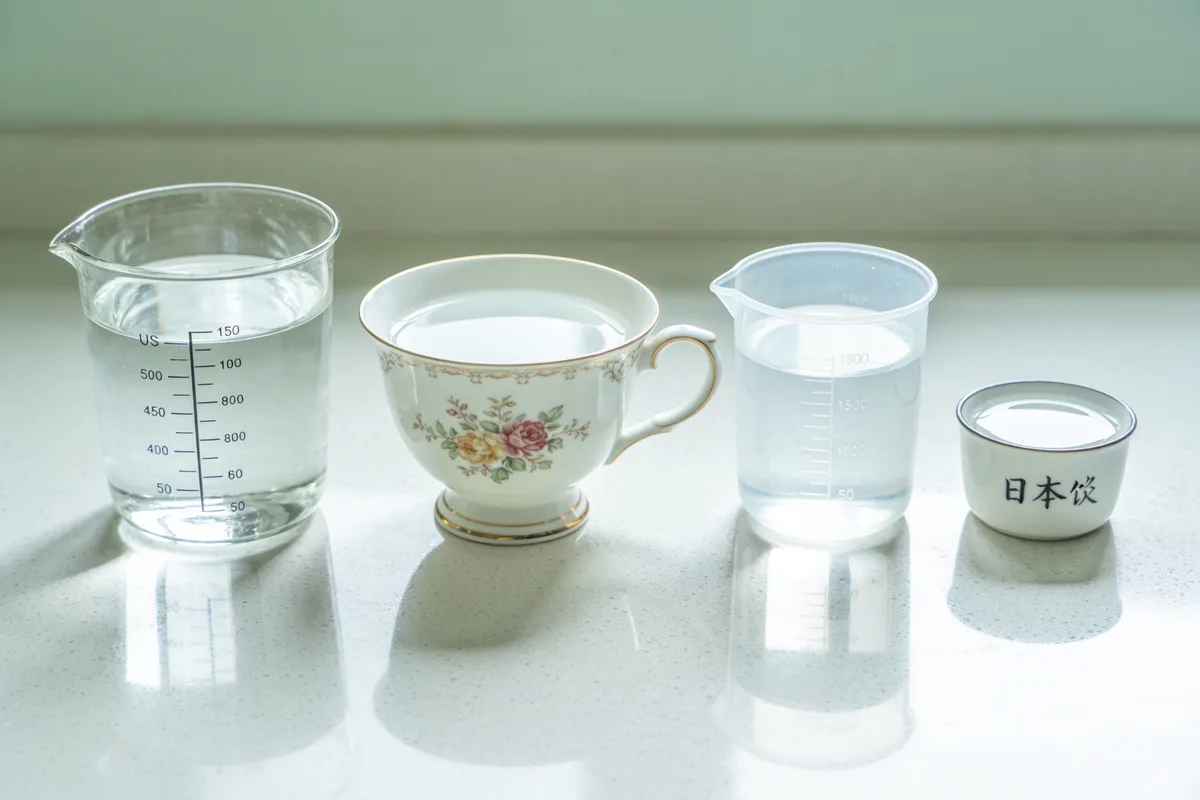
How big is a cup in the UK, Australia, and Japan?
Not all cups are the same size, and this quietly breaks recipes that cross borders. The US customary cup is 236.6 mL, but at least four other “cups” show up in cookbooks and on the internet:
| Cup standard | Milliliters | US fluid ounces |
|---|---|---|
| US customary cup (US recipes) | 236.6 mL | 8.00 fl oz |
| US legal cup (nutrition labels) | 240 mL | 8.12 fl oz |
| Metric cup (Australia, NZ, Canada) | 250 mL | 8.45 fl oz |
| UK imperial cup (older UK books) | 284.1 mL | 9.61 fl oz |
| Japanese cup (rice cookers) | 200 mL | 6.76 fl oz |
For most cooking, the US, legal, and metric cups are close enough to swap: the gap is under 6 percent, which sauces and soups won’t notice. Baking is less forgiving, and the UK imperial cup is a full 20 percent bigger than the US cup, so an older British recipe measured with American cups will come out short.
There’s a bonus trap inside the fluid ounce itself: a UK imperial fluid ounce is 28.4 mL while a US fluid ounce is 29.6 mL. Small per ounce, but it compounds over a large batch. When in doubt, convert the recipe to milliliters with the mL to cups converter or the oz to mL converter and measure metric, since milliliters mean the same thing everywhere on earth.
The Japanese cup earns a special mention because it lives in your kitchen right now: the plastic cup that came with your rice cooker is 200 mL, not 236.6. Use it only for the rice cooker, and use the machine’s water lines rather than a US measuring cup.
How many ounces in a cup? The quick reference charts
Everything above, condensed into the two lookups you’ll actually come back for. First, ounces back to cups, for when a recipe or bottle gives you fluid ounces:
| Fluid ounces | Cups | Also known as |
|---|---|---|
| 4 fl oz | 1/2 cup | |
| 6 fl oz | 3/4 cup | Teacup serving |
| 8 fl oz | 1 cup | Half a pint |
| 12 fl oz | 1.5 cups | Soda can |
| 16 fl oz | 2 cups | 1 pint |
| 32 fl oz | 4 cups | 1 quart |
| 64 fl oz | 8 cups | Half gallon |
| 128 fl oz | 16 cups | 1 gallon |
And the three rules that settle 95 percent of ounce questions at the counter:
- Liquids: 1 cup = 8 fluid ounces, always. Halve, double, and quarter it freely.
- Dry goods: a cup weighs whatever the ingredient weighs. Flour is about 4.2 oz, sugar 7.1 oz, butter 8 oz. Check the table above or weigh it.
- Labels: FL OZ means volume, NET WT means the scale. Match the recipe’s unit to the right tool.
Keep a scale near the mixing bowls and the whole question mostly disappears: grams and weight ounces don’t care how hard you packed the cup, how humid the flour is, or whose cup standard the author used. For everything that pours, the cups to mL converter turns any cup amount into milliliters or back in one step, and the full cups to grams baking guide walks the weight side ingredient by ingredient.
Frequently asked questions
A US cup holds 8 fluid ounces, which measure volume. If you're asking about weight, the answer changes with the ingredient: a cup of flour weighs about 4.2 ounces, a cup of sugar about 7.1 ounces, and a cup of butter exactly 8 ounces. Liquids are the only case where 8 is always right.
Half a cup is 4 fluid ounces, or 8 tablespoons. For dry ingredients by weight, halve the full-cup number instead: half a cup of flour weighs about 2.1 ounces and half a cup of sugar about 3.5 ounces. The 4-ounce answer only holds for liquids like water, milk, or oil.
There's no single number, because dry ounces measure weight and a cup measures volume. A cup of all-purpose flour is about 4.2 ounces, rolled oats 3.2 ounces, granulated sugar 7.1 ounces, and honey 12 ounces. You have to look up the ingredient, or better, weigh it on a scale.
Only for fluid ounces. 8 fluid ounces of any liquid is exactly 1 cup. But 8 ounces by weight is a cup only when the ingredient happens to weigh 8 ounces per cup, like butter. An 8 oz block of cream cheese is a weight, and it measures out to about 1 cup, while 8 oz of flour by weight is nearly 2 cups.
A cup of water is 8 fluid ounces by volume, and it weighs about 8.35 ounces on a scale. Water is the one ingredient where volume and weight nearly match, which is why it's the reference point for every other conversion.
A measuring cup of brewed coffee is 8 fluid ounces, but a coffee maker's 'cup' is smaller: most machines count 5 fluid ounces per cup, and some use 6. That's why a '12-cup' carafe holds only about 60 fluid ounces, which is 7.5 actual cups.
There are 2 tablespoons in 1 fluid ounce, so a 16-tablespoon cup works out to 8 fluid ounces. Going smaller, 1 fluid ounce is also 6 teaspoons. These spoon equivalents only apply to volume, not to weight ounces on a scale.
Calcowa's editorial team builds and checks every calculator against published formulas, then writes these guides so the numbers make sense. Each tool shows its formula and a worked example. See our methodology.
Related guides
How Many Tablespoons in a Cup? Full Chart
How many tablespoons in a cup? A US cup holds 16 tablespoons or 48 teaspoons. Get every fraction chart, butter stick math, and the awkward thirds workaround.
ConvertersHow Many mL in a Cup? US, UK and Metric
How many mL in a cup? A US cup is 237 mL, a metric cup is 250 mL, and a UK cup holds 284 mL. Get the full chart, cup-size decoder, and rounding error math.
ConvertersBaking Substitutes: Eggs, Butter, Dairy, Oil
Baking substitutes for eggs, butter, buttermilk, sour cream, heavy cream, milk, and oil, with exact ratios, gram weights, and a swap risk rating for each.