
Baking Substitutes: Eggs, Butter, Dairy, Oil
Baking substitutes for eggs, butter, buttermilk, sour cream, heavy cream, milk, and oil, with exact ratios, gram weights, and a swap risk rating for each.
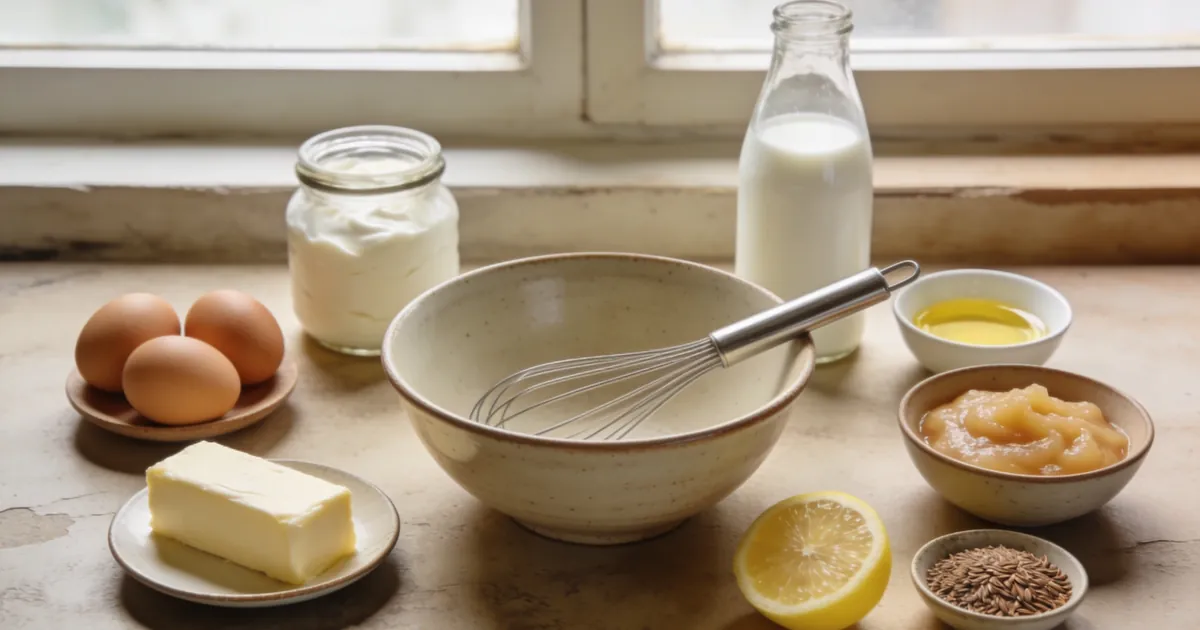
Short answer: the best baking substitutes match the original ingredient on three things: fat, acid, and moisture, and every reliable swap below is built on that rule. Most baking substitutes lists just hand you ratios. This one goes further: for each swap you’ll get the exact ratio, its weight in grams, what it does to texture and flavor, and a risk rating that tells you whether it’s safe anywhere or strictly a last resort.
One habit that makes every substitution more reliable: measure by weight. A “cup” of packed brown sugar and a loose one can differ by 30 grams, and that gap is often bigger than the difference between the real ingredient and its stand-in. The cups to grams converter gives you the gram weight of any ingredient in seconds.
Why do some baking substitutes work and others flop?
Baked goods aren’t forgiving the way soups are, because baking is chemistry with a timer. Every major ingredient does at least one structural job, and a substitute succeeds or fails based on whether it covers that same job. There are three variables that matter:
Fat carries flavor, shortens gluten strands (that’s where “shortening” gets its name), and controls spread. Butter is about 80% fat, oil is 100%, and yogurt is around 3%. Swap one for another without adjusting and the texture shifts.
Acid reacts with baking soda to create the carbon dioxide that lifts your batter. Buttermilk, sour cream, yogurt, and lemon juice are all acidic. Replace an acidic ingredient with a neutral one and your quick bread can come out dense and slightly soapy tasting, since unreacted baking soda has a bitter, metallic edge.
Moisture determines crumb and bake time. Applesauce is mostly water; butter is barely 16% water. Trade fat for fruit puree and you’ve made the batter wetter, which is why those bakes need extra minutes in the oven.
Keep those three in mind and the tables below stop being rules to memorize and start making sense on their own.
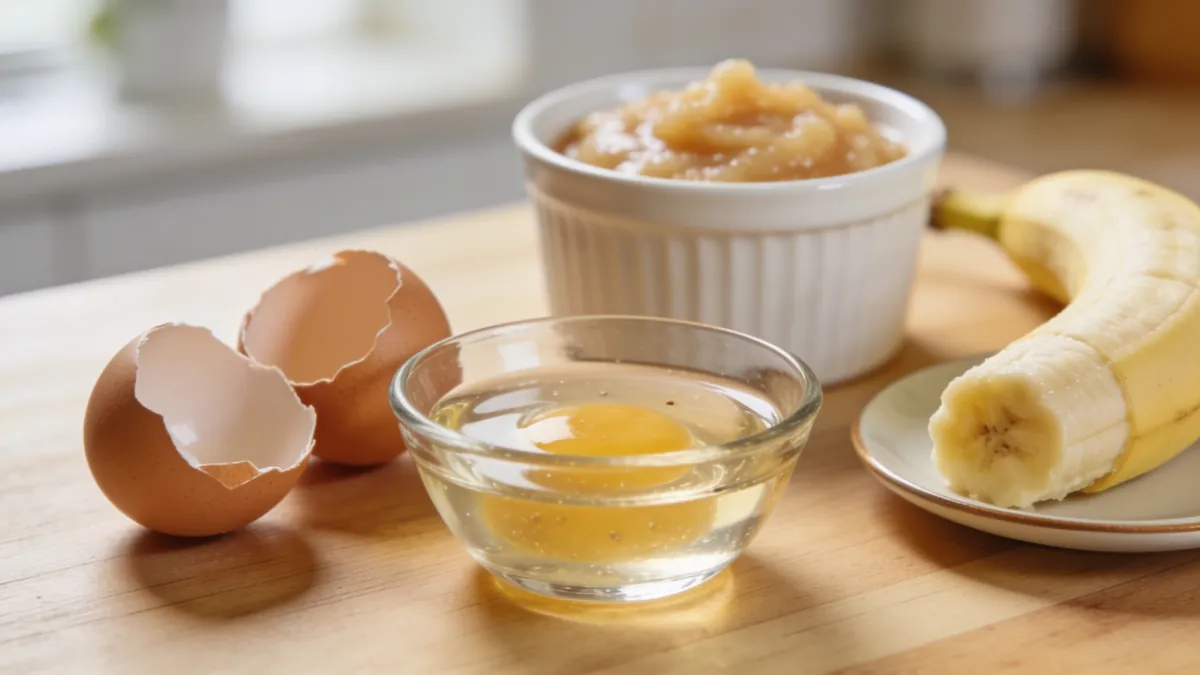
What can you use instead of eggs in baking?
Eggs bind, moisturize, and lift. No single substitute does all three, so pick based on which job the egg was doing. In cookies and brownies it mostly binds; in cakes it also lifts.
| Substitute (per 1 egg) | Amount | Weight | Texture effect | Best for | Risk |
|---|---|---|---|---|---|
| Flax egg (ground flax + water) | 1 tbsp flax + 3 tbsp water | 7 g + 45 ml | Slightly denser, nutty note | Cookies, muffins, pancakes | Safe anywhere |
| Unsweetened applesauce | 1/4 cup | 61 g | Moister, softer crumb | Cakes, quick breads | Sturdy bakes |
| Mashed ripe banana | 1/4 cup | 57 g | Moist, adds banana flavor | Muffins, pancakes | Sturdy bakes |
| Plain yogurt | 1/4 cup | 61 g | Tender, slightly tangy | Cakes, muffins | Sturdy bakes |
| Mayonnaise | 3 tbsp | 41 g | Rich, very tender | Chocolate cakes | Sturdy bakes |
| Carbonated water | 1/4 cup | 60 ml | Lighter, airier | Pancakes, waffles | Last resort |
Two limits worth knowing. First, substitutes stop working past two eggs; a recipe with three or more needs eggs to hold together, and no puree will save it. Second, none of these whip. Meringues, sponge cakes, and souffles are off the table (aquafaba, the liquid from a can of chickpeas, is the one exception, whipped at 3 tablespoons per egg).
If your recipe lists eggs by weight, a large egg without the shell is about 50 grams, which helps when you’re converting the rest of the recipe to grams anyway.
What’s the best butter substitute for baking?
First check how the recipe uses butter. Melted butter is acting as a liquid fat, so oil slides right in. Softened butter creamed with sugar is doing something oil can’t: holding millions of tiny air pockets that become your cake’s lift. For creaming, you need another solid fat.
| Substitute (per 1 cup butter) | Amount | Weight | Texture effect | Best for | Risk |
|---|---|---|---|---|---|
| Vegetable oil (melted butter only) | 3/4 cup | 165 g | Moister, denser, less flavor | Brownies, quick breads | Safe anywhere |
| Shortening | 1 cup | 190 g | Taller, softer, blander | Cookies, frosting | Safe anywhere |
| Coconut oil (solid) | 1 cup | 218 g | Similar spread, faint coconut | Cookies, bars | Sturdy bakes |
| Greek yogurt | 1/2 cup | 123 g | Denser, tangy, less rich | Muffins, snack cakes | Sturdy bakes |
| Mashed avocado | 1 cup | 230 g | Dense, fudgy, greenish tint | Brownies, chocolate cake | Last resort |
| Margarine (80% fat sticks) | 1 cup | 227 g | Nearly identical | Anything | Safe anywhere |
The oil ratio trips people up, so here’s the logic: butter is roughly 80% fat and 16% water, while oil is all fat. Using 3/4 the volume of oil matches the fat and skips the water butter would have contributed. A stick of butter, for reference, is 113 grams; the cups to grams converter covers butter, oil, and shortening if your recipe mixes units.
Skip whipped or “light” tub spreads entirely. They’re cut with water and air, and cookies made with them spread into puddles.
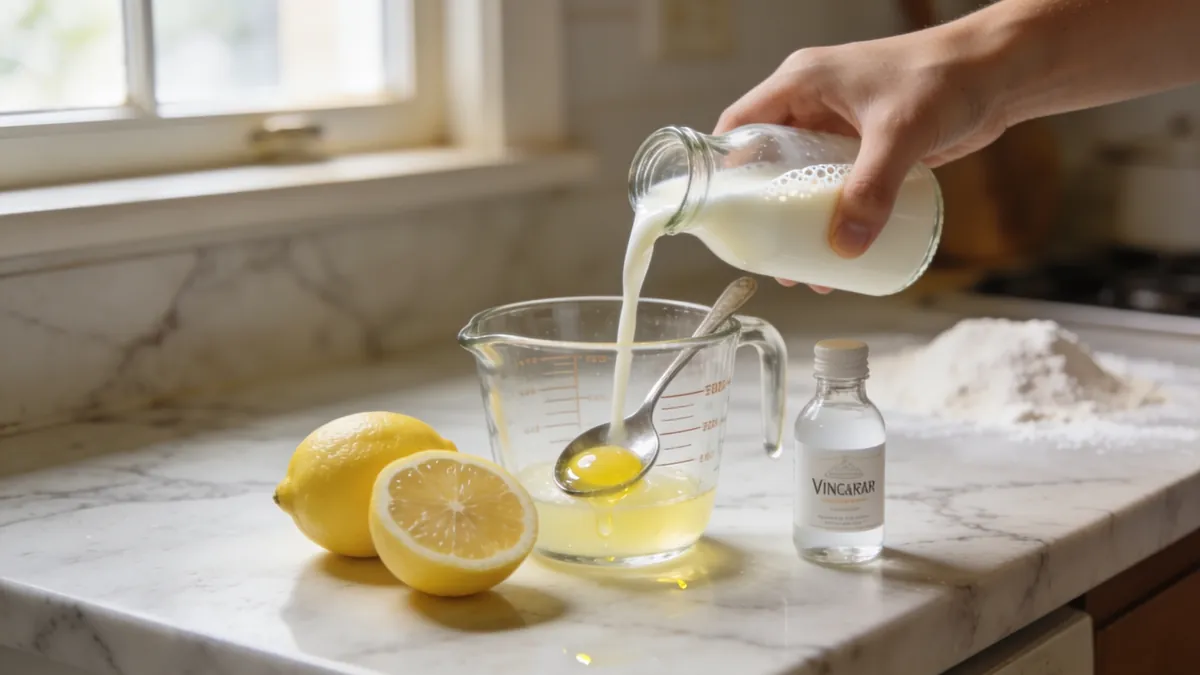
How do you make a buttermilk substitute?
This is the most searched baking swap of them all, and luckily it’s the most reliable. Buttermilk brings two things: acidity that activates baking soda, and a tang that flavors the crumb. Any acidic dairy stand-in covers both.
| Substitute (per 1 cup buttermilk) | Amount | Weight | Stand time | Risk |
|---|---|---|---|---|
| Milk + lemon juice or white vinegar | 1 tbsp acid, milk to 1 cup | 245 g | 5-10 min | Safe anywhere |
| Plain yogurt thinned with milk | 3/4 cup yogurt + 1/4 cup milk | 245 g | None | Safe anywhere |
| Kefir | 1 cup | 245 g | None | Safe anywhere |
| Sour cream thinned with milk | 3/4 cup + 1/4 cup milk | 240 g | None | Sturdy bakes |
| Milk + cream of tartar | 1 3/4 tsp per cup | 245 g | 5 min | Sturdy bakes |
The soured-milk version won’t thicken like true buttermilk, and that’s fine. The chemistry is what matters: the acid neutralizes baking soda on contact, releasing carbon dioxide right in the batter. That’s also why you shouldn’t sub plain milk for buttermilk without adding acid. The soda would have nothing to react with, your pancakes would come out flat, and the flavor would carry that faint bitter edge of unreacted soda.
Measuring the acid accurately matters more here than anywhere else in this guide; 1 tablespoon is 15 ml, and the tablespoons to milliliters converter sorts out any recipe written in metric.
What can replace sour cream and heavy cream?
These two dairy workhorses fail differently, so they get one table each. Sour cream is thick, acidic, and about 20% fat. Its nearest twin sits next to it in the dairy case.
| Substitute (per 1 cup sour cream) | Amount | Weight | Texture effect | Risk |
|---|---|---|---|---|
| Whole-milk Greek yogurt | 1 cup | 245 g | Nearly identical | Safe anywhere |
| Plain whole-milk yogurt | 1 cup | 245 g | Slightly thinner batter | Safe anywhere |
| Creme fraiche | 1 cup | 240 g | Richer, less tang | Safe anywhere |
| Cottage cheese, blended smooth | 1 cup | 226 g | Less rich, more protein | Sturdy bakes |
| Buttermilk | 3/4 cup | 184 g | Thinner; reduce other liquid | Last resort |
Heavy cream is the opposite problem: it’s not acidic at all, it’s just very fat, around 36%. Substitutes need to rebuild that fat.
| Substitute (per 1 cup heavy cream) | Amount | Weight | Whips? | Risk |
|---|---|---|---|---|
| Milk + melted butter | 3/4 cup milk + 1/4 cup butter | 240 g | No | Safe anywhere |
| Evaporated milk | 1 cup | 252 g | Chilled, briefly | Sturdy bakes |
| Half-and-half + melted butter | 7/8 cup + 2 tbsp butter | 240 g | No | Safe anywhere |
| Full-fat coconut cream, chilled | 1 cup | 240 g | Yes | Sturdy bakes |
| Whole milk alone | 1 cup | 244 g | No | Last resort |
The milk-plus-butter trick handles batters, ganache, custards, and pan sauces without anyone noticing. Whipping is the hard boundary: below roughly 30% fat, cream physically can’t trap air. Chilled coconut cream is the only substitute on the list that genuinely whips into stable peaks.
Which milk substitutes bake well?
Milk is the easiest ingredient here, because in most batters it’s mainly providing moisture with a little fat and protein. Nearly anything pourable and unsweetened works cup for cup.
| Substitute (per 1 cup milk) | Amount | Weight | Notes | Risk |
|---|---|---|---|---|
| Unsweetened soy milk | 1 cup | 243 g | Closest protein match, best browning | Safe anywhere |
| Unsweetened oat milk | 1 cup | 240 g | Neutral, slightly sweet | Safe anywhere |
| Unsweetened almond milk | 1 cup | 240 g | Thinner, mild nut note | Safe anywhere |
| Canned coconut milk (light) | 1 cup | 240 g | Richer, faint coconut | Sturdy bakes |
| Water + melted butter | 1 cup water + 1 tbsp butter | 250 g | Emergency fix | Last resort |
| Evaporated milk + water | 1/2 cup each | 246 g | Nearly identical to milk | Safe anywhere |
Two cautions. Sweetened or vanilla-flavored plant milks add sugar and flavor you didn’t plan for, so always grab the unsweetened carton. And in recipes where milk is the star, like custards or bread pudding, soy milk holds up best because its protein content is closest to dairy’s, which affects both set and browning.
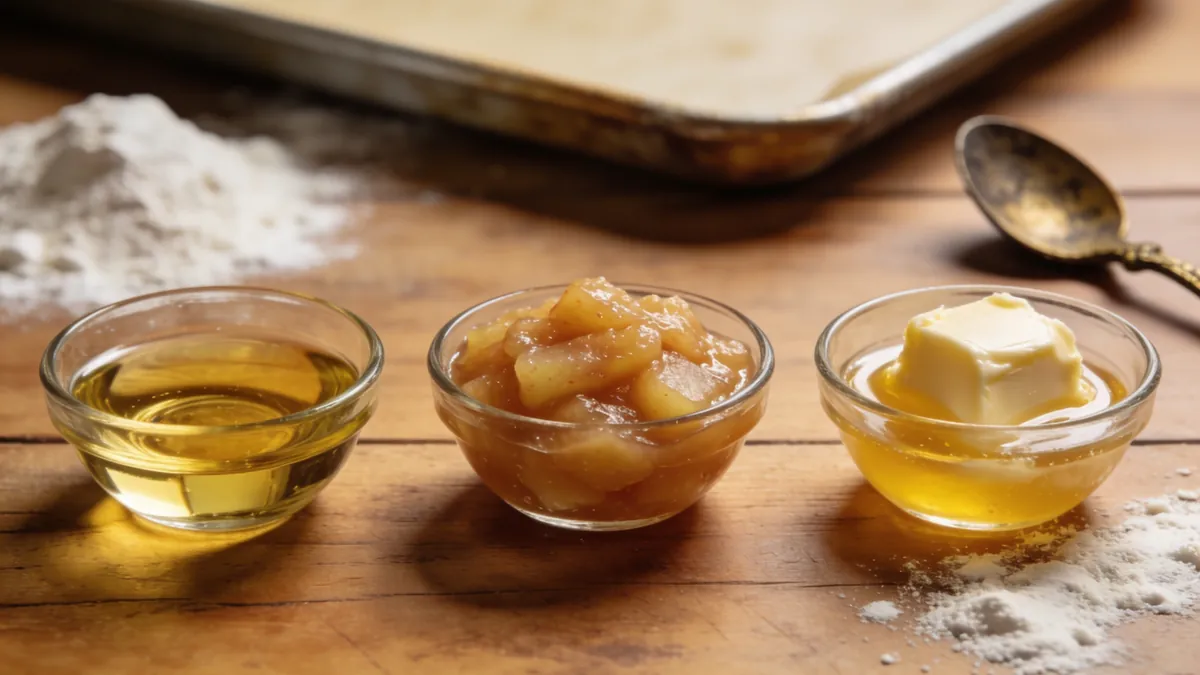
What about oil, sugar, and leavening swaps?
The remaining pantry emergencies bundle nicely. These come up constantly in the search data: oil substitutes, brown sugar fixes, and the baking soda versus baking powder math.
| You’re out of | Use instead | Ratio | Weight | Risk |
|---|---|---|---|---|
| Vegetable oil | Melted butter | 1:1 | 227 g/cup | Safe anywhere |
| Vegetable oil | Unsweetened applesauce | 1:1, reduce sugar slightly | 244 g/cup | Sturdy bakes |
| Brown sugar | White sugar + molasses | 1 cup + 1 tbsp | 200 g + 20 g | Safe anywhere |
| Baking soda | Baking powder | 1 tsp soda = 3 tsp powder | 4.8 g = 13.8 g | Safe anywhere |
| Baking powder | Soda + cream of tartar | 1/4 tsp soda + 1/2 tsp tartar per tsp | 4.6 g/tsp | Safe anywhere |
| Cake flour | AP flour + cornstarch | 1 cup minus 2 tbsp AP + 2 tbsp starch | 120 g | Safe anywhere |
The 3:1 rule for leavening deserves a note, because it only runs one direction safely. Baking powder is baking soda pre-mixed with its own acid, so it works in any batter. Baking soda alone needs an acidic ingredient already in the recipe to wake it up. If the batter has buttermilk, yogurt, brown sugar, or cocoa, soda can stand in for powder at one third the amount. In a neutral batter it just sits there, and your cake stays flat.
Applesauce for oil is the one swap in this table where reading the batter matters. It works beautifully in muffins and snack cakes but turns brownies cakey and gummy, since brownies rely on fat for that dense chew.
The swap risk cheat sheet
Ratios answer “how much.” This table answers the question competitors’ lists skip: “how likely is this to actually work?” Pin it somewhere useful.
| Risk level | What it means | Examples |
|---|---|---|
| Safe anywhere | Behaves like the original in any recipe | Soured milk for buttermilk, Greek yogurt for sour cream, oil for melted butter, sugar + molasses for brown sugar |
| Sturdy bakes | Fine in muffins, quick breads, cookies; risky in delicate cakes | Applesauce for eggs or oil, coconut oil for butter, evaporated milk for cream |
| Last resort | Gets a bake out of the oven, expect a texture change | Carbonated water for eggs, plain milk for cream, buttermilk for sour cream |
A good rule when you’re stacking substitutions: one “safe anywhere” swap plus one “sturdy bakes” swap is usually fine, but two “sturdy bakes” swaps in the same recipe compound each other. Swapping both the eggs and the butter in a delicate cake is how you end up with a dense, wet brick.
Substitution is also where weighing ingredients pays off most, because every table above assumes an accurate starting measurement. If your cups tend to be a little generous, the full cups to grams baking chart shows the correct gram weight for 25+ ingredients, and the converter itself does the math for odd amounts. Weigh the swap, respect the risk rating, and most “I was out of it” bakes come out close enough that nobody at the table asks questions.
Frequently asked questions
For most recipes, a flax egg: 1 tablespoon of ground flaxseed mixed with 3 tablespoons of water, rested for 5 minutes. It binds well in cookies, muffins, and quick breads. In moist cakes, 1/4 cup of unsweetened applesauce per egg works too. Neither helps much with lift, so avoid both in recipes that lean on eggs for structure, like sponge cakes or souffles.
Vegetable oil covers melted butter at 3/4 the amount, so 3/4 cup of oil replaces 1 cup of melted butter. If the recipe creams softened butter with sugar, reach for shortening or coconut oil instead, cup for cup, because creaming needs a solid fat that traps air. Oil can't do that, and cookies made with it spread thin.
Stir 1 tablespoon of lemon juice or white vinegar into a measuring cup, then add milk up to the 1-cup line. Let it stand 5 to 10 minutes until it looks slightly curdled. The acid is the working part: it reacts with baking soda for lift and tenderizes the crumb, which is exactly what real buttermilk does.
Yes, and it's the closest match there is. Use plain whole-milk Greek yogurt cup for cup. Both are acidic, thick, and roughly similar in moisture, so cakes and muffins come out nearly identical. Nonfat Greek yogurt also works but gives a slightly less tender crumb because it's missing the fat.
Mix 3/4 cup of milk with 1/4 cup of melted butter to replace 1 cup of heavy cream in batters, custards, and sauces. That rebuilds the fat content cream would have supplied. It won't whip, though. If you need whipped cream, chill a can of full-fat coconut milk overnight and whip the solid cream that separates on top.
Yes, but you need 3 times as much, so 1 teaspoon of baking soda becomes 3 teaspoons of baking powder. Going the other direction is trickier: baking soda alone needs an acid in the batter to activate, so it only replaces baking powder if you also add something acidic like buttermilk, yogurt, or lemon juice.
Often, yes. Swaps that add moisture, like applesauce for oil or yogurt for butter, usually add 3 to 8 minutes of bake time and benefit from a toothpick check before you pull the pan. Swaps that add fat, like oil for butter, tend to brown faster, so check a few minutes early. Trust the doneness cues over the clock.
Calcowa's editorial team builds and checks every calculator against published formulas, then writes these guides so the numbers make sense. Each tool shows its formula and a worked example. See our methodology.
Related guides
How Many Tablespoons in a Cup? Full Chart
How many tablespoons in a cup? A US cup holds 16 tablespoons or 48 teaspoons. Get every fraction chart, butter stick math, and the awkward thirds workaround.
ConvertersHow Many mL in a Cup? US, UK and Metric
How many mL in a cup? A US cup is 237 mL, a metric cup is 250 mL, and a UK cup holds 284 mL. Get the full chart, cup-size decoder, and rounding error math.
ConvertersHow Many Ounces in a Cup? Dry vs Liquid
How many ounces in a cup? A US cup is 8 fluid ounces, but dry ounces vary: a cup of flour weighs 4.2 oz, sugar 7.1 oz. Get the full charts and the fix.